

After briefly appearing in Saint Peter’s Square to wish thousands of worshippers “Happy Easter” on Sunday, Pope Francis died on Easter Monday, April 21, at his residence in the Vatican’s Casa Santa Marta. He was 88.
In a video statement, the Vatican announced his death early Monday, just weeks after he survived a serious bout of double pneumonia.
His death plunged Catholics around the world into grief. Cardinal Kevin Farrell, camerlengo, announced the Pope’s passing, “with profound sadness.” His passing also leaves the papacy vacant until a conclave is convened in Rome to elect the new pontiff.
Pope Francis — who was the first Latin American elevated to the papacy on March 13, 2013, after a two-day conclave charged with determining a successor to Pope Benedict XVI — leaves a record of attacks on clericalism, empowerment of the church’s lay members and dialogue within the church around its public and pastoral role on issues such as climate change and xenophobia, immigration and women’s ordination.
Labeled “liberal, progressive, populist, disruptive and even pop,” Francis steered the church leftward after more than three decades of conservative leadership. But his record on issues like climate change, clergy abuse scandals, women’s ordination and LGBTQ acceptance is far from settled, with critics questioning his reforms and his handling of the Roman Catholic Church’s various crises.
That legacy, and its long-term impact on Catholics worldwide, will be in part decided by who is selected as the next pope. That process begins with a convening of the College of Cardinals — the conclave — within 15 to 20 days of the pope’s death.
This edition of ReligionLink provides insight on Pope Francis’ tenure in the papal office, in-depth information about how a new pope will be chosen and leads on who the top contenders are to lead more than 1.3 billion Roman Catholics worldwide.
Pope Francis' life and legacy
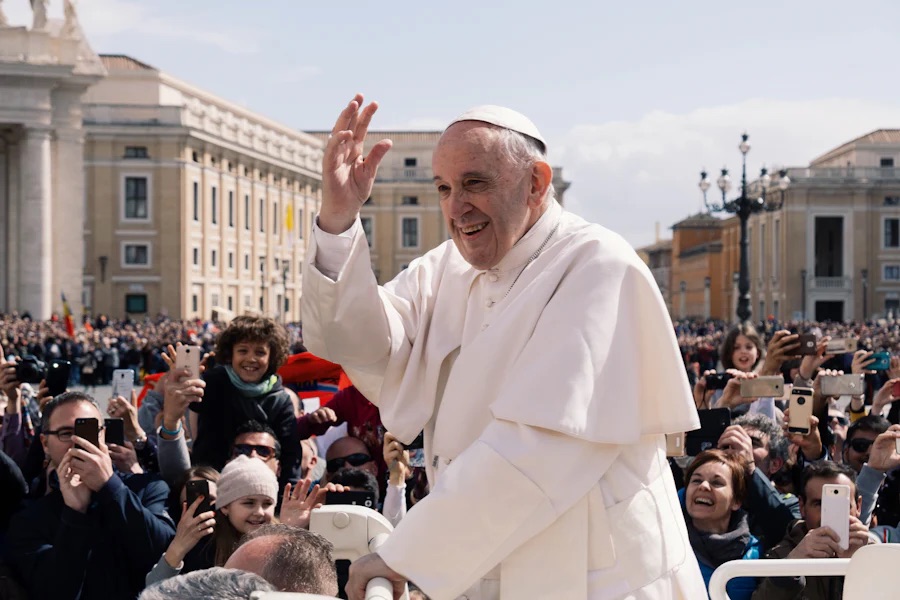
Even during his papacy, Francis’ potential legacy was hotly contested. Both critics and supporters debated whether the pontificate was one of transition or construction, conflict or bridge-building, reform or regression. While what Francis’ legacy is — or will be — will continue to be disputed, this section provides a look back on some of the key moments from his 12 years as the spiritual and political head of the Roman Catholic Church.
While this timeline could start with Francis’ service as a Jesuit Priest in the 70s and 80s, his appointment as Archbishop of Buenos Aires or any other number of significant moments, the ReligionLink timeline begins with his election as pope after the relative rarity of the resignation of his predecessor, Benedict XVI. For more on Francis’ life before becoming pope, see this handy, simplified guide HERE.
Major moments and milestones
March 13, 2013: Argentinian Cardinal Jorge Mario Bergoglio was elected as the 266th pope. Also notable is his installation as Pope Francis, a unique papal name that drew a ream of commentary from church-watchers and analysts speculating what name he might choose.
June 29, 2013: Three months into his papacy, Pope Francis releases his first encyclical — a public letter from the pope developing Catholic teaching on a topic — “Lumen Fidei,” laying out his argument for the relevance of faith in the modern world.
July 8, 2013: Pope Francis made his first trip outside Rome, visiting the Italian island of Lampedusa, the closest European territory to North Africa, to which many migrants have sought refuge. During his trip, which underscored the church’s commitment to global migrants, he denounced what he called the “globalization of indifference” toward their plight.
July 29, 2013: Flying back from the World Youth Day in Rio de Janeiro, Pope Francis famously replies to a question about a supposedly gay priest with the words, “Who am I to judge?” The five words set off a firestorm and signal a potential shift in papal policy, though Francis later says he is simply following catechetical guidance on acting with compassion toward the marginalized.
December 2013: Pope Francis is named Time magazine’s “Person of the Year.” He also goes on to be named the Religion News Association’s “Newsmaker of the Year,” being chosen for the recognition a further three times — most recently in 2024.
May 24, 2015: Pope Francis publishes his second encyclical, “Laudato Si’.” Its focus on climate change and environmental justice builds on teachings from his predecessors — St. John Paul II and Pope Benedict XVI — about nature as God’s gift and the need for humans to cooperate with God in promoting the flourishing of the environment for the benefit of all. Francis’ urgency in “Laudato Si’,” however, is seen as a new direction in Catholic teaching, making responding to climate change a moral imperative.
September 2015: Pope Francis visits Cuba; Washington, D.C.; New York; and Philadelphia, the latter to attend the Festival of Families. The trip, which includes the canonization of St. Junipero Serra along with addresses to the U.S. Congress and the United Nations, kicks off “Francis fever.” Religion reporters gather in Philadelphia ahead of the pope’s visit to cover the cultural impact.
January 2018: During his visit to Chile, Pope Francis defends a Chilean bishop from charges of sexual abuse, calling the accusations “calumny” and slander. The public outcry in response prompts him to open a new Vatican investigation into the case and apologize in person to victims. Summoning the Chilean bishops’ conference to Rome and faulting them for the cover-up, all 34 Chilean bishops submit their resignations.
April 21, 2018: Three women are appointed as consultors to the Dicastery for the Doctrine of the Faith. It is the first time women, or laypeople for that matter, are named as active contributors to the department of the Roman Curia in charge of the religious discipline of the Church. These appointments were part of, and presaged future, efforts to bring more women into roles of higher and higher responsibility within the Vatican and the Church as a whole, as evidenced by the appointment of Sister Raffaella Petrini as the first woman governor of Vatican City in March 2025.
Aug. 25, 2018: Italian Archbishop Carlo Maria Viganò, former Vatican ambassador in the United States, publishes an 11-page letter accusing Pope Francis and numerous other senior church leaders of concealing allegations of sexual misconduct by Cardinal Theodore McCarrick. McCarrick was removed from active ministry and later resigned from the College of Cardinals. Calling for the pope’s own resignation, the ultraconservative critic Viganò is himself found guilty of schism and excommunicated in July 2024.
Feb. 4, 2019: During the first-ever papal trip to the Arabian Peninsula, Pope Francis meets with Sheikh Ahmad el-Tayeb, grand imam of Egypt’s Al-Azhar mosque and university, at a meeting in Abu Dhabi, United Arab Emirates. Together, the two leaders sign “Human Fraternity for World Peace and Living Together” a document pledging Christian-Muslim cooperation toward peace. The “Human Fraternity” document would go onto become a cornerstone of the pope’s effort to forge better relations with Muslims across the world.
Feb. 21-24, 2019: Pope Francis hosts a global summit on the sex abuse crisis — the Meeting on the Protection of Minors in the Church — and enacts stricter worldwide policies governing the reporting and disciplining of abusers. U.S. bishops commit to new policies to hold themselves accountable for cases of abuse.
Oct. 21, 2019: Conservative Catholics had long decried Pope Francis’ anti-traditional turn and his crackdown on the use of the old Latin Mass. In autumn 2019, activists steal three statues from a Vatican-area church, throwing them into the Tiber River in what later becomes known as the “Pachamama stunt.” The act is seen as a symbolic high-water mark of conservative opposition to Francis’ papacy.
March 27, 2020: As the COVID-19 pandemic grips the world, Francis delivers the blessing “urbi et orbi” (to the city and the world) at an evening prayer service before an empty St. Peter’s Square in Rome. The eerie emptiness of the normally packed square is underscored by Pope Francis’ lone figure staring out into the darkness, holding up the monstrance of the Blessed Sacrament, becoming an indelible image of pandemic-era ministry.
Oct. 3, 2020: On the feast day of St. Francis of Assisi, Pope Francis publishes his third encyclical, “Fratelli Tutti.” With the social isolation of the pandemic continuing, Francis emphasizes the interconnection between all humans and calls for the further development of universal fraternity among people of all faiths.
July 4, 2021: Pope Francis undergoes a three-hour surgery to remove part of his colon. The pope is hospitalized several times during his 12-year tenure and suffers health issues throughout his life — including having part of one of his lungs removed when he is 21 years old and later being diagnosed with pleurisy. Throughout his pontificate, the pope suffers bouts of painful sciatica; knee problems that lead him to start using a wheelchair in 2022; hospitalizations for bronchitis in 2023 and 2025; surgery for an abdominal hernia in June 2023; and falls with noticeable injuries in 2024 and 2025.
Oct. 4, 2021: Pope Francis and other world religious leaders sign a document, “Faith and Science: An Appeal for COP26,” calling for “urgent, radical and responsible action” to reduce carbon emissions, with wealthier nations taking the lead.
June 29, 2022: During the festival of the Apostles Peter and Paul, Pope Francis sends out his annual letter, “Desiderio Desideravi,” calling for Catholics to better implement the liturgical reform of the Second Vatican Council and its goal of promoting the “full, conscious, active and fruitful celebration” of the Mass, which is met with further ire by conservatives within the church. His reimposition of curbs on celebrating the Latin Mass reverses one of his predecessor Benedict’s signature decisions.
July 24-29, 2022: Pope Francis makes “a penitential trip” to Canada to apologize for the abuse and forced assimilation of its First Nation, Métis and Inuit communities at church-run residential schools. At the location of one such school, Francis apologizes to Indigenous peoples for the “catastrophic” and “evil” policy of forcibly assimilating Native peoples into Christian society.
Jan. 5, 2023: Pope Francis presides over Pope Benedict XVI’s funeral in St. Peter’s Square. The Mass marks the first time in more than two centuries that one pope did so for another. It also closes out the unprecedented narrative of Benedict’s 2013 resignation and the election of Pope Francis, the two living as retired and reigning pope in the Vatican for a decade.
March 30, 2023: Francis repudiates the “Doctrine of Discovery,” a set of ideas used to justify seizing land that Catholic empires — particularly the Spanish and Portuguese — “discovered” and colonizing Indigenous people in the Americas.
October 2023: Pope Francis gathers a synod of Catholic bishops and laypeople, known as the Synod on Synodality, which approves a nonbinding document citing an “urgent” need for fuller participation of women in church governance. Progressives had hoped, and conservatives feared, the gathering would send stronger signals on behalf of women in leadership and of welcoming of LGBTQ+ people.
Nov. 8, 2023: The Vatican says it is permissible, under certain circumstances, for transgender Catholics to be baptized and serve as godparents. This pronouncement comes as Pope Francis criticizes laws that criminalize homosexuality as “unjust.” Earlier in the year, a meeting of German bishops and laity calls for the church to approve blessings of same-sex unions.
Dec. 18, 2023: The Vatican makes the landmark decision to approve Roman Catholic priests administering blessings to same-sex couples as long as they are not part of regular church rituals or liturgies. Catholic bishops of Africa issue a statement refusing to follow the declaration, asserting such blessings are “contrary to the will of God.” The Vatican defends the directive but acknowledges bishops’ conferences will need time to reflect on it.
April 2024: Pope Francis approves updates to papal funeral rites, introducing several new elements, including how the Pope’s mortal remains are to be handled after death.
Oct. 24, 2024: Pope Francis releases his fourth encyclical, “Dilexit Nos,” calling for love in a world fraught with consumerism and algorithms.
February 11, 2025: In a letter to U.S. bishops, Pope Francis rebuked the administration of U.S. President Donald Trump for its plans to mass deport migrants, warning the forceful removal of people purely because of their status deprives them of inherent dignity. This comes after Vice President J.D. Vance, a Catholic, defended the administration’s mass deportations on theological grounds.
February 14, 2025: At the age of 88, Pope Francis is checked into Rome’s Gemelli Hospital for double pneumonia, spending weeks at the hospital. While continuing the work of the papacy as he recovered, fears rose that his passing was imminent given the severity of his symptoms. Eventually, the Pope was released from hospital on orders of convalescence on March 24.
Potential legacy
In an interview with the Spanish daily newspaper La Vanguardia in June 2014, Pope Francis was asked how he would like to be remembered. He famously replied, “‘He was a good guy, he did what he could, he was not so bad.’ I would be happy with that.”
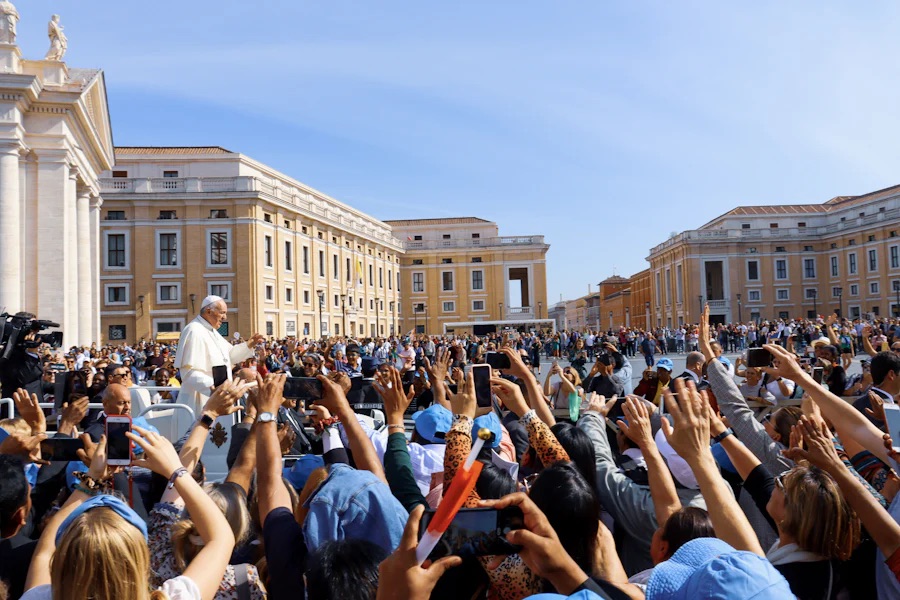
Self-deprecating replies aside, Pope Francis’ legacy will be one of both subtle, progressive changes in the church and sometimes acrimonious ideological divides. Since becoming pope in 2013, Francis has pushed to make the church more inclusive and welcoming to women, LGBTQ+ people, people of other faiths, migrants and Indigenous peoples. He also took firmer stances on such issues as climate change, the death penalty and nuclear power. He has also embroiled himself in controversies over sexual abuse in the church, the celebration of the Latin Mass, and church governance (for more details, see the timeline above).
Conservatives have decried what they see as a leftward lurch away from centuries of tradition — some cardinals going so far as to express theological doubts (dubia) about Francis’ positions — while more progressive voices within the church protest that his reforms did not go far enough.
Altogether, it seems likely that Francis will leave a church more divided than it was at the beginning of his pontificate and that the process to select his successor will be highly politicized.
But for all the press about his softer approach to being pontiff, Pope Francis has also been a shrewd political maneuverer. Wanting to cement his legacy and desiring the church to continue his reforms, Francis has appointed bishops, created cardinals and favored allies for key positions, which may cement his reforms and would be difficult to replace or remove by a future pope opposed to Francis’ preferences. As a result, the College of Cardinals is younger on average than when Francis was elected, and new archbishops in Brussels, Buenos Aires and Madrid likely have somewhere around two decades ahead of them.
The impact of these changes, and the question of Pope Francis’ legacy, will first be asked at the impending conclave that will come in the following days. Conservatives are already plotting to make sure there is a return to something like the papacies of Benedict and John Paul, even going so far as to conduct “opposition research” in advance of the election.
Though the conclave will not be as dramatic as that depicted in Edward Berger’s 2024 film of that name, it will be anything but placid.
Related stories and commentary
- Read “Here’s what happens when a pope dies,” from Religion News Service on April 21, 2025.
- Read “Pope’s doctors considered letting him die,” from The Telegraph on March 25, 2025.
- Read “Pope seen for the first time since going to hospital,” from the BBC on March 16, 2025.
- Read “Pope Francis’ openness about his health may be as tactical as it is truthful,” from Religion News Service on March 14, 2025.
- Read “From Bergoglio to Francis,” from The Dial on March 13, 2025.
- Read “Three things Pope Francis should do before he dies,” from RNS on Feb. 17, 2025 (Commentary).
- Read “The Future of The Catholic Church,” from First Things on Aug. 1, 2024 (Analysis).
- Read “The synod working document isn’t edgy — but it’s exciting,” from National Catholic Reporter on July 12, 2024 (Commentary).
- Read “The Evolution of Pope Francis’s Stance on LGBTQ Rights,” from The Revealer on April 4, 2024 (Analysis).
- Read “Pope Francis’ synod made few waves, but organizers say it’s already changing the church,” from RNS on Jan. 25, 2024.
- Read “Vatican 2023: Pope Francis Builds His Legacy: Highlights Include Synod, Church Reforms, World Travel,” from National Catholic Register on Dec. 29, 2023.
- Read “Pope Francis’ 87th birthday closes out a big year of efforts to reform the church, cement his legacy,” from The Associated Press on Dec. 7, 2023.
- Read “Pope Francis has stacked the next conclave — but will it matter?” from RNS on Sep. 25, 2023.
- Read “As the pope heads to Portugal, he’s laying the groundwork for the church’s future and his own legacy,” from The Associated Press on Aug. 1, 2023.
- Read “The legacy of a decade of Pope Francis,” from National Catholic Reporter on March 16, 2023 (Commentary).
- Read “A look back at Pope Francis’s legacy as he marks 10 years of papacy,” from National Public Radio on March 12, 2023.
- Read “Benedict XVI’s quiet exit at odds with his lasting imprint on the pontificate,” from RNS on Jan. 10, 2023.
Choosing the next pope
Pope Francis’ successor will be chosen by the Catholic Church’s highest officials, the College of Cardinals, through a papal election at the Vatican, called a conclave.
The College of Cardinals governs the Church during the time between the Pope’s deathand the election of his successor. The College is headed by Cardinal Kevin Farrell of the U.S. He is the cardinal camerlengo and administers the property and revenue of the Holy See. Immediately following the vacancy of the Holy See, the cardinals hold a series of meetings called “general congregations” at the Vatican in which they discuss the priorities for the global Catholic Church in the coming years. These discussions inform the decisions to be made at the conclave.
Though there are 252 cardinals, representing more than 70 nations, only the 135 under the age of 80 are eligible to vote as cardinal electors. St. Paul VI ruled in 1975 that there should be no more than 120 cardinal electors, but St. John Paul II, Pope Benedict XVI and now Pope Francis have flouted that rule.
Of the cardinals who will vote for the new pope, 108 (80%) were appointed by Pope Francis, 22 by Benedict XVI and five by St. John Paul II. A total of 53 electors are European, 17 of whom are Italian. There are also 23 from Asia, 17 from South America and 18 from Africa, 16 from North America — including 10 from the U.S. — and four each from Central America and Oceania. These figures represent the least-European makeup of the electors in the history of the conclave. As reported by The Economist, by nominating cardinals from diverse regions, Francis has likely influenced “the future direction of the Church and how it addresses global issues. It will be interesting to see how this impacts the selection of his successor and the Church’s priorities moving forward.”
Usually, the dean of the College of Cardinals would convoke the conclave. However, since Curial Cardinal Giovanni Battista Re of Italy, the current dean, is 91 and therefore ineligible to vote, the senior cardinal-elector, Pietro Parolin — also of Italy — will do the honors. Pope Gregory X decreed during the Second Council of Lyons in 1274 that cardinal electors should be locked in seclusion cum clave (Latin for “with a key”) and not permitted to leave until a new pope had been elected.
The camerlengo, Kevin Farrell, will supervise the electoral process, with secret ballots being cast four times a day (only once on the first day). Cardinals process one-by-one before Michelangelo’s fresco of the Last Judgment in the Sistine Chapel, dropping with a prayer a twice-folded ballot into a large, silver-gold urn with a prayer. The electors are not technically required to choose a cardinal as the next pope. In theory, any baptized, male Catholic can be chosen. But the last time a pope was elected who was not a cardinal was Urban VI in 1378, formerly a monk and archbishop of Bari, Italy.
The four-times-daily voting continues until a candidate receives a two-thirds supermajority. Results are read aloud and recorded after each round. If the two-thirds threshold is not met, the ballots are burned in a stove near the chapel with a mixture of chemicals to produce black smoke.
In the 20th century, the average conclave lasted only three days. For Francis and Benedict, the vote took only five and four ballots respectively. In 1268, a conclave began that lasted 33 months, or nearly three years.
If no one is elected after three days, there is a pause in the voting for up to a day. Thanks to a new rule introduced by Pope Benedict XVI, if a pope is not chosen after 33 rounds, the cardinals go to a runoff between the top two candidates, who cannot cast their own ballots, unlike in previous rounds.
When a candidate receives the required number to be elected pope, the dean of the College of Cardinals will ask if the cardinal accepts the decision. If he does, he then selects a papal name.
The ballots from the final round of voting are burned with a different set of chemicals to produce white smoke, signaling from the Sistine Chapel’s copper chimney that a new pope has been elected.
The senior cardinal deacon, currently French Cardinal Dominique Mamberti, then proceeds to the balcony of St. Peter’s cathedral to announce “Habemus Papam” — or “we have a pope” — and introduce the new pope to the world in Latin before the newly elected pontiff addresses the city and the world in his freshly donned papal vestments.
Learn more about the process below:
- Read “Here’s how a conclave elects a new pope,” from the Canadian Broadcasting Corp.
- Read “How a new pope is elected” from National Geographic.
- Read “Conclave: How cardinals elect a Pope,” from the BBC.
- Read “Step-by-Step Guide to Electing a Pope,” from PBS News.
- Read “The choreographed election of a pope in a nutshell,” from The Associated Press.
Potential papabili
The bookies make odds on everything, including who the next pope might be. At the time of writing (UPDATE AS NEED BE), the odds are in favor of Filipino Cardinal Luis Antonio Gokim Tagle (67) of Manila with Pietro Parolin (70) and Canada’s Mark Ouellet (80) are also strong contenders, according to early bets. In the past, bettors favored Cardinal Peter Kodwo Appiah Turkson (76) of Ghana as well as American cardinals Raymond Burke (76) and Timothy M. Dolan (75).
Betting odds aside, there are numerous names being included in list of papabili (singular papabile, or popeable), candidates who could well be the next pontiff.
Among those who come up on multiple rankings is Parolin of Italy, the Vatican’s secretary of state since October 2013 and one of Pope Francis’ closest advisers. Seen as a “consensus cardinal,” he could be chosen as a way to break the deadlock between more conservative and progressive cardinals within the conclave. Another name that comes up frequently is the relatively young Tagle of Manila. Beyond his favorable betting odds, Tagle is seen as a progressive, if imperfect, candidate — even being dubbed the “Asian Pope Francis.” He would be the first pope from eastern Asia. Cardinal Mario Grech (68) of Malta, the synodal secretary-general, is another progressive candidate who pops up as a papabile among bookmakers and Vatican watchers.
More moderate possibilities, who can be seen as “center left” or “center right” depending upon the issue, include Cardinal Christoph Schönborn (80) of Austria, Turkson of Ghana and Matteo Zuppi (69), president of the Italian bishops’ conference and personal peace envoy of the pope.
Among conservatives, Cardinal Péter Erdő (72) of Hungary, president of the European Bishops’ Conference, is a standout for his stances on gay marriage and European immigration, though he has publicly backed Francis and shied away from publicity. Another darling of the Catholic right to emerge in recent years is Cardinal Fridolin Ambongo Besungu (65) of Congo, who flew to Rome in January 2024 to convey African bishops’ dismay at Pope Francis’ pronouncement “Fiducia Supplicans,” permitting the blessing of unmarried same-sex couples. The most prominent American to emerge on any list continues to be Burke, a traditionalist and vocal critic of Pope Francis.
Other names batted about include Cardinals Robert Sarah (79) of Guinea, Chibly Langlois (66) of Haiti, Gérald Lacroix (67) of Quebec, Orani João Tempesta (74) of Brazil, Leopoldo Brenes (76) of Nicaragua, Daniel Sturla (65) of Uruguay, Jean-Pierre Kutwa (79) of the Ivory Coast and Soane Patita Paini Mafi (63) of Tonga.
Sources and experts
Trying to keep your papabile and camerlengo straight? To navigate the twists to come as the successor to Pope Francis is chosen, here is a list of helpful experts and top sources to turn to:
-
John L. Allen Jr.
John L. Allen Jr. is editor of Crux, a website specializing in coverage of the Catholic Church. He previously was the longtime Rome correspondent for National Catholic Reporter. Allen is considered a top Vaticanologist and a leading English-language expert and commentator on the papacy.
-
Sheila Briggs
Sheila Briggs is a theology professor at the University of Southern California and an expert on the Jewish Torah in the writings of Paul. Other projects include analysis of contemporary popular culture, such as how the AI genre intersects with religion in American popular culture, as well as Roman Catholicism, feminist theology and gender, race, class and Christianity.
-
Katie Bugyis
Katie Bugyis is a professor at the University of Notre Dame in South Bend, Indiana. She is a historian of Christian theology, liturgical practice and material culture. She is the author of The Care of Nuns: Benedictine Women’s Ministries in England During the Central Middle Ages.
-
John C. Cavadini
John C. Cavadini is a theology professor at the University of Notre Dame. He is co-editor of Pope Francis and the Event of Encounter, with Donald Wallenfang.
-
Haig Chahinian
The Rev. Haig Chahinian is chief executive officer of Salt and Light Catholic Media Foundation, a Canadian media company. Chahinian grew up in Toronto as part of the Armenian Catholic Church, one of 23 sui iuris Eastern Churches in communion with the Holy See. He’s served in various Catholic broadcasting, marketing and digital media roles. While in Rome, he led Telepace Armenia, part of the Telepace Catholic broadcasting network in Italy. He is fluent in English, French, Italian and Armenian.
-
Claire Giangravè
Claire Giangravè is a Rome-based reporter for RNS, covering the Catholic Church and the Vatican. Before joining RNS in 2019, Giangravè was at Crux Catholic Media Inc., where she served as a faith and culture correspondent. She also previously worked at CNBC/Class Editori, ForexInfo.it, PBS and MSNBC News. She earned her bachelor’s degree from Roma Tre University and her master’s degree in journalism from Boston University. Giangravè speaks Italian, English and French.
-
CIA World Factbook: Religion – Catholicism and Vatican City
The CIA World Factbook contains data on Roman Catholic population percentages across the globe, as well as information about Vatican City.
-
Darren W. Davis
Darren W. Davis is professor of political science at University of Notre Dame, Indiana. Davis is co-author of Perseverance in the Parish?: Religious Attitudes From a Black Catholic Perspective. Based on the first national survey of African American Catholics, this book explores the perceptions of racism and racial experiences in the Catholic Church.
-
Jeana DelRosso
Jeana DelRosso is professor of English at Notre Dame of Maryland University. She writes on Catholicism and women’s literature and is the editor of Unruly Catholic Nuns: Sisters’ Stories, with Leigh Eicke and Ana Kothe. -
Leslie G. Desmangles
Leslie G. Desmangles is an emeritus professor at Trinity College in Connecticut. He has published widely, most notably an awarded book titled The Faces of the Gods: Vodou and Roman Catholicism in Haiti. He can speak to Roman Catholic practice in Haiti, the Caribbean and West Africa.
-
Michele Dillon
Michele Dillon is dean of the College of Liberal Arts and professor of sociology at the University of New Hampshire in Durham. She wrote “The American Abortion Debate: Culture War or Normal Discourse?” for the book The American Culture Wars: Current Contests and Future Prospects. She is the author of Catholic Identity: Balancing Reason, Faith and Power.
-
Discerning Deacons
Discerning Deacons is an organization advocating for the diaconal ministry of women, which members view as historically, theologically and anthropologically possible and as a means of church renewal. Contacts include co-directors Casey Stanton ([email protected], English), based in North Carolina, and Ellie Hidalgo ([email protected], English and Spanish), based in Miami.
-
Colleen Dulle
Colleen Dulle is associate editor at America Media. Dulle writes and edits Vatican news and analysis pieces, along with hosting and producing the weekly news podcast “Inside the Vatican.” She creates Vatican explainer videos for America Media’s YouTube channel and contributes to Sacred Heart University’s “Go, Rebuild My House” blog.
-
Jordan Denari Duffner
Jordan Denari Duffner is a Catholic scholar of Muslim-Christian relations who has written two books on Islamophobia and interfaith relations. She comments frequently on Pope Francis’ relationship with Islam and Muslims.
-
Austen Ivereigh
Austen Ivereigh is a U.K.-based writer, journalist and commentator best known for his books on and with Pope Francis, and for his role in the media explaining the convictions of the Catholic Church. He is Fellow in Contemporary Church History at Campion Hall, Oxford, and a regular contributor to The Tablet, America magazine and Commonweal, among others. He is the author of The Great Reformer: Francis and the Making of a Radical Pope, a biography of Pope Francis.
-
Tia M. Kolbaba
Tia M. Kolbaba is a religion professor at Rutgers University in New Brunswick, New Jersey. She can speak to Orthodox and Catholic Christian relations.
-
Ulrich Lehner
Ulrich Lehner is an associate professor of theology at the University of Notre Dame. He knew Pope Benedict XVI personally and studied in his department at the University of Regensburg in Germany. His areas of expertise include the history of Christianity after 1500 and global Catholic studies, as well as gender and race in the history of Catholicism.
-
Timothy Matovina
Timothy Matovina is an associate professor of theology at the University of Notre Dame in South Bend, Indiana. He is an expert in theology and culture, specializing in U.S. Catholic and U.S. Latino theology and religion.
-
Mark Noll
Mark Noll is emeritus professor of history at the University of Notre Dame and one of the most cited authorities today on evangelicalism in America — as well as on the relationship between evangelicals and Roman Catholics. He co-founded the Institute for the Study of American Evangelicals at Wheaton College, where he taught for many years. Noll’s many books include America’s God: From Jonathan Edwards to Abraham Lincoln.
-
Anna Peterson
Anna Peterson is a professor in the department of religion at the University of Florida. Her research focuses on religion and social change, especially Catholicism in Latin America; environmental and social ethics; and animal studies. She has published a number of articles, chapters and book in these areas. Her current research analyzes the role of religion in movements for social change. She is also involved in several collaborative research projects exploring the ethical challenges presented by climate change.
-
Thomas Reese
The Rev. Thomas J. Reese is a Jesuit priest and senior analyst for Religion News Service. He writes and comments widely on Catholic culture and politics. He is the author of Inside the Vatican: The Politics and Organization of the Catholic Church.
-
Ariel Salzmann
Ariel Salzmann is a history professor at Queen’s University in Ontario, Canada. Her research includes histories of Mediterranean communities and Muslim societies, the transformation of market systems and the making of global capitalism, as well as Islamophobia and Catholic-Muslim relations.
-
David Seljak
David Seljak is a professor of religion at the University of Waterloo. He studies multiculturalism in Canada and Quebec, with interests in the sociology of Canadian Catholicism.
-
Sarah Shortall
Sarah Shortall is a historian who teaches courses on modern French history and the history of Catholicism. In addition to these themes, her research also explores the history of science, secularization theory, human rights, decolonization and the global circulation of religious ideas. She is the author of Soldiers of God in a Secular World: Catholic Theology and Twentieth-Century French Politics.
-
Andrea Tornielli
Andrea Tornielli is editorial director for the Vatican Dicastery for Communication. He is a former Italian journalist and author of numerous books on religion, with a special focus on Catholicism.
-
U.S. Conference of Catholic Bishops
The U.S. Conference of Catholic Bishops has raised concerns about a range of freedom of conscience questions related to protection of life issues and supports including conscience provisions in proposed funding bills.
-
Phyllis Zagano
Phyllis Zagano is senior research associate-in-residence and professor of religion at Hofstra University. Her books include Just Church: Catholic Social Teaching, Synodality, and Women.