


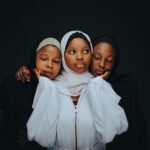
Black History Month is a reminder that the religious traditions of Black Americans are far broader, and more complex, than the stories we usually tell.
Too often, coverage zooms in on the Black church at election time or dusts off prominent civil rights-era imagery, then moves on. What can get missed are stories such as Black women shaping faith communities with or without titles or pulpits, Black Muslims and Buddhists building institutions and influence, younger generations remixing tradition online and African diasporic spiritual practices sustaining people outside formal institutions.
Just as underreported are the tensions — between generations, over gender and sexuality, between religious traditions, around money, power and politics. Black religion is not frozen in time. It is adaptive, contested and deeply embedded in the everyday experiences of a diverse range of Black Americans’ lives.
In a moment marked by racial violence and economic strain, Black religious life in the U.S. continues to shape how communities resist, heal and imagine what comes next. The task for religion reporters is not to mythologize Black religious traditions, but cover them with curiosity, range and urgency.
In this guide, we offer background, resources, expert sources and related content to help you better report on the religious life of Black Americans.
Background
The development of Black religious traditions in the United States began under conditions of violence and forced improvisation.
Enslaved Africans brought diverse spiritual traditions with them, which were suppressed, blended and reshaped under slavery. Elements of African narratives, music, language and religion seeped their way into various aspects of American culture, from jazz and gospel music to “soul food” and rice cultivation.
Christianity, initially imposed, was reinterpreted through the reality of bondage and the potential of future hope, producing a tradition that emphasized deliverance, divine justice and gritty survival. The “invisible institution” of hush harbors and secret prayer meetings is as foundational as any church building.
After emancipation, Black Americans built independent religious institutions at an astonishing pace given the oppression and structural limitations they continued to face. Historically Black denominations such as the African Methodist Episcopal (AME), African Methodist Episcopal Zion (AMEZ) and National Baptist Convention became central pillars of community life, offering not only worship but education, political leadership and mutual aid.
These churches loom large in public memory, but they are only part of the story. Black religious life has also been shaped by Muslims, most visibly early on through the Ahmadiyya and Moorish Science Temple and later through the Nation of Islam, Five Percent Nation (or Nation of Gods and Earths) and Sunni communities. Black Jews, Buddhists, Hindus and adherents of African diasporic traditions like Lucumí (among others) have also sustained vibrant, if often overlooked, religious worlds.
The 20th century brought new movements and new chapters in the story of Black religion. Pentecostalism surged among African Americans and the Great Migration reshaped worship styles and theology across a broad swathe of the U.S., from the South to the Southwest.
Black religion powered the civil rights movement, but it also wrestled with internal disagreements over “civility,” gender roles and political strategy. Figures like Martin Luther King Jr. and Malcolm X may dominate coverage, but the organizing work of women and lay leaders is also important to highlight, with the likes of Fannie Lou Hamer and Clara Muhammad (Clara Ann Howard) deserving more attention.
Today, Black religion is evolving again. Though Black Americans are more religious — and more Christian — than Americans of other races and ethnicities, church attendance is shifting and the number of Black “nones” has risen to 22 percent, according to recent reports from Pew Research Center. Reporters might also turn to data and research from the Center for the Study of African American Religious Life and Society for the Study of Black Religion (SSBR)
As with other communities, digital spaces matter more than ever and religion continues to shape how people show up through activism, mutual aid and cultural production outside traditional institutions.
For journalists, the key is to remember that Black religion in the U.S. is not a single tradition, a single politics or a single past. It is a long and varied history still unfolding and deeply entangled with American public life.
Related Newswriting
- Read “New PBS docuseries examines the ‘interwoven history’ of Black and Jewish Americans,” from Religion News Service on Feb. 3, 2026.
- Read “Faith leaders criticize Trump administration’s removal of Philadelphia slavery exhibit” from Religion News Service on Jan. 28, 2026.
- Read “Five Black churches each receive $1 million grants for historic preservation,” from Religion News Service on Jan. 22, 2026.
- Read “Black and Jewish people were allies once. Can they be again?” from the Forward on Jan. 19, 2026.
- Watch “Black and Jewish in America,” from PBS on Feb. 3, 2026.
- Read “Black church leaders aid Minneapolis, seek laws curtailing federal agents’ mask usage,” from Religion News Service on Jan. 16, 2026.
- Read “At 150, historic Fort Worth church faces sale, but congregants say its story isn’t over,” from the Forth Worth Report on Dec. 22, 2025.
- Read “Key facts about Black Americans and religion,” from Pew Research Center on Dec. 2, 2025 (Analysis).
- Read “The Black Catholic intellectual tradition is vital to the church,” from US Catholic on Nov. 20, 2025 (Commentary).
- Read “Faith, Identity, And Resistance Among Black Muslim Students,” from Muslim Matters on July 14, 2025.
- Read “2024 Election Post-Mortem: Black Americans, Religion And The Vote,” from Religion Unplugged on May 31, 2025 (Analysis).
- Read “‘Sinners’ opens a new conversation about Black religion in film,” from Religion News Service on May 7, 2025.
- Read “Ryan Coogler film ‘Sinners’ explores Black Americans’ complex ties to the Church,” from The Tennessean on April 29, 2025 (Commentary).
- Read “Why I’m Holding My Passover Seder In One Of The Oldest Black Churches,” from Religion Unplugged on April 9, 2025 (Commentary).
- Read “Book Forum: Judith Weisenfeld’s Book, “Black Religion in the Madhouse” from Black Agenda Report on April 2, 2025.
- Read “The Black Coptic Church: A Search for Identity in Urban America,” from Church Life Journal on Feb. 24, 2025.
- Read “The illegal church at the heart of US history,” from the BBC on Feb. 20, 2025.
- Read “Black Muslims Redefining Media While Changing Narratives In Pop Culture,” from American Muslim Today on Feb. 17, 2025.
- Read “Black, atheist and unapologetic: the rise of secularism in African American communities,” from The Guardian on Feb. 15, 2025.
Before 2025
- Read “The Dharma and Kwanzaa,” from Tricycle on Dec. 19, 2024 (Commentary).
- Read “The Black Church Has Five Theological Anchors,” from Christianity Today in Nov./Dec. 2024 (Review).
- Read “The Spirit of Beyoncé” from Orion on Feb. 16, 2024 (Commentary).
- Read “For Black ‘nones’ who leave religion, what’s next?” from Religion News Service on Feb. 12, 2024.
- Read “Black, queer, and Christian,” from The Christian Century in Feb. 2024.
- Read “Documentary on Black millennials depicts wide range of faith practice,” from National Catholic Reporter on Oct. 25, 2023.
- Read “Experiencing Interfaith in African American History,” from Interfaith American on Jan. 13, 2023.
- Read “Black Witches Debunk The Biggest Myths About The Occult,” from Essence on Dec. 28, 2022.
- Read “Black Spirit, Black Struggle,” from Boston Review on Dec. 22, 2022.
- Read “The Black Hindu Experience,” from India Currents on March 15, 2022.
- Read “Black Muslims in the Americas: An Enduring Legacy,” from NewLines Magazine on Jan. 20, 2022 (Analysis).
- Read “Reclaiming our ancestors’ spirituality, virtually,” from Sojourners on April 19, 2021.
Relevant Sources
-
Aminah B. (McCloud) Al-Deen
Aminah B. (McCloud) Al-Deen is professor emerita of Islamic Studies in the Department of Religious Studies at DePaul University. In 2006, she founded the United States’ first undergraduate baccalaureate program in Islamic World Studies. She is the former Editor in Chief of the Journal of Islamic Law & Culture. She has written about black Muslims. She can also discuss the place of animals in the Muslim world. The notion of animal rights is a new one for Muslim societies, she says.
-
Donna Auston
Donna Auston is an anthropologist, writer, and public intellectual whose body of work focuses on race, ethnicity, gender, religion, protest and social movements, media representation and Islam in America. She is the Senior Program Officer at the Wenner-Gren Foundation in New York.
-
Adelle M. Banks
Adelle M. Banks is the projects editor and a national reporter for RNS, covering topics including religion and race, the faith of African Americans and partnerships between government and religious groups. An award-winning journalist, Banks joined RNS in 1995. She previously was the religion reporter at the Orlando Sentinel and a reporter at The Providence Journal and newspapers in the upstate New York communities of Syracuse and Binghamton. She is the co-author of Becoming a Future-Ready Church: 8 Shifts to Encourage and Empower the Next Generation of Leaders (2024). Find her on LinkedIn @adellebanks.
-
Anthea Butler
Anthea Butler is the Geraldine R. Segal Professor in American Social Thought and chair of religious studies at the University of Pennsylvania. A historian of African American and American religion, she specializes in the history of Pentecostalism and is the author of White Evangelical Racism: The Politics of Morality in America.
-
Center for the Study of African American Religious Life
The Center for the Study of African American Religious Life (CSAARL) is part of the Smithsonian National Museum of African American History and Culture (NMAAHC). Media inquiries, interview requests, and press passes for the center should be directed through the NMAAHC Office of Public Affairs. -
Matthew J. Cressler
Matthew J. Cressler is a scholar, comics creator and teacher whose work focuses on religion, race and justice. He is also chief of staff for the Corporation for Public Interest Technology. He is the author of Authentically Black and Truly Catholic: The Rise of Black Catholicism in the Great Migration (NYU Press, 2017).
-
MaryAnn McKibben Dana
MaryAnn McKibben Dana is a Presbyterian pastor and author of several books on religion in the suburbs and women in the church. She serves at Trinity Presbyterian Church in Herndon, Va.
-
Marla Frederick
Marla Frederick is a leading ethnographer and scholar focused on the African American religious experience. She is dean of Harvard Divinity School, Boston. Her expertise includes the African-American religious experience. She is the author or co-author of four books, including Colored Television: American Religion Gone Global and Between Sundays: Black Women and Everyday Struggles of Faith.
-
Henry Louis Gates Jr.
Henry Louis Gates, Jr. is the Alphonse Fletcher University Professor and Director of the Hutchins Center for African & African American Research at Harvard University
-
Erika Gault
Erika Gault is Director of the Center for the Study of African American Religious Life and the Lilly Endowment Curator of African American Religious History at the Smithsonian National Museum of African American History and Culture. Her work focuses on the intersection of religious history, technology and urban black life in post-industrial America.
-
Cedric Harmon
Cedric Harmon was the co-founder and executive director of Many Voices: A Black Church Movement for LGBTQ+ Justice and advocate for LGBTQ+ justice within Black church contexts.
-
Sikivu Hutchinson
Sikivu Hutchinson is an author and cultural critic who writes about Black freethinkers, atheism and religion’s role in race and gender politics, offering a perspective often missing from mainstream faith coverage. Contact through her website.
-
Michael Muhammad Knight
Michael Muhammad Knight is a scholar, author and gonzo journalist whose work covers Islamic studies, American Islam, hadith literature, gender studies, race and theories of the body.
-
Lutherans for Racial Justice
Lutherans for Racial Justice (LRJ) is a grassroots coalition committed to fostering multiethnic church and school cultures, as well as racial equity, justice and healing within The Lutheran Church—Missouri Synod (LCMS). The founders are Matthew Ryan González and Joshua Salzberg.
-
Elizabeth McAlister
Elizabeth McAlister is a professor at Wesleyan University with expertise in Afro-Caribbean religions including Haitian Vodou, Pentecostalism, race theory, transnational migration and evangelical spiritual warfare.
-
Alaina Morgan
Alaina Morgan is a history professor at the University of Southern California, where is focuses on the African Diaspora and the historic utility of religion, in particular Islam, in racial liberation and anti-colonial movements of the mid- to late-twentieth century Atlantic world.
-
Otis Moss III
Otis Moss III is pastor of Trinity United Church of Christ in Chicago. He espouses Black theology and advocates efforts to reach Black youth in the city. A poet, he wrote Redemption in a Red Light District: Messages of Hope, Healing, and Empowerment.
-
Anthony B. Pinn
Anthony B. Pinn is a professor of humanities and religious studies at Rice University in Houston. He has been critical of the prosperity gospel preached in some Black megachurches for its lack of emphasis on community service and charity. He is the author of Why, Lord?: Suffering and Evil in Black Theology and editor of Redemptive Suffering: a History of Theodicy in African-American Religious Thought. He also studies African-American religious humanism and is the author of African American Humanist Principles: Living and Thinking Like the Children of Nimrod and By These Hands: A Documentary History of African American Humanism.
-
Eugene Sutton
The Rt. Rev. Eugene Sutton is assistant bishop in the Episcopal Diocese of Washington. He was one of three conveners of Bishops United Against Gun Violence, an ad hoc group of around 60 Episcopal leaders. Contact is through Allen Fitzpatrick.
-
Jemar Tisby
Jemar Tisby is a historian who studies, writes and speaks on racism in the church. He is the author of The Color of Compromise: The Truth About the American Church’s Complicity in Racism, How to Fight Racism and The Spirit of Justice.
-
Emilie M. Townes
Emilie M. Townes is the Martin Luther King, Jr. Professor of Religion & Black Studies at Boston University School of Theology. She is an ordained American Baptist clergywoman. She is an expert on Christian ethics, womanist theology, cultural theory, as well as racial and economic justice.
-
Judith Weisenfeld
Judith Weisenfeld is a professor of religion at Princeton University, where she specializes in American religion, with an emphasis on the 20th century and African American religion. She is the author of Hollywood Be Thy Name: African American Religion in American Film, 1929-1949 and Black Religion in the Madhouse: Race and Psychiatry in Slavery’s Wake.
-
Joseph Winters
Joseph Winters is the Alexander F. Hehmeyer Associate Professor of Religious Studies and African and African American Studies at Duke University. His research interests lie at the intersection of African-American religious thought, Black literature and critical theory. Winters is author of Hope Draped in Black: Race, Melancholy, and the Agony of Progress (2016).
-
W.E.B. Du Bois Institute for African and African American Research
W.E.B. Du Bois Institute for African and African American Research at Harvard University is a research center dedicated to the study of the history, culture, and social institutions of Africans and African Americans.