


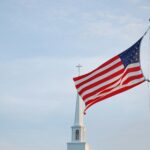
As the United States approaches its 250th anniversary in July 2026, journalists have a rare opportunity to revisit the nation’s story through one of its most dynamic and contested forces — religion.
From before the earliest encounters between Indigenous Peoples and Europeans, to today’s increasingly diverse and “spiritual-but-not-religious” landscape, religion has shaped American identity, politics and culture in profound ways.
The Semiquincentennial is not just a moment to look back but a chance to tell deeper, more human stories about belief, doubt and belonging across 25 decades of American life. The most engaging religion reporting will move past histories and clichés and into the lived realities of Americans whose spiritual lives continue to shape the nation, sometimes in surprising ways.
This guide is designed to help reporters uncover fresh, compelling and nuanced stories in advance of the celebrations and remembrances. It encourages moving beyond institutional histories to critically cover lived religion, overlooked communities and emerging spiritual trends.
At its best, coverage of religion during the Semiquincentennial can illuminate how Americans have wrestled with meaning, belonging and power, what has resulted from these struggles and how those struggles continue to evolve.
A Crash Course on American Religious History
Religion in America predates the nation itself, beginning with the rich and varied spiritual traditions of Indigenous peoples. Scholar of American religion, Thomas Tweed, reflects in his new book Religion in the Lands that Became America:
Most surveys of U.S. religion have presupposed that the story must begin with and focus on the British colonies—as opposed to starting, as I do, with ancient Indigenous practices in the territory now within national borders, and then chronicling the history of those locales, from Florida to Alaska and Maine to Hawai‘i. That presupposition commits narrators to focusing on Anglo-Protestant men who had political and ecclesiastical power in Britain’s Atlantic colonies. In turn, everyone else—Protestant women as well as racial and religious others—appear as supporting actors with bit parts. More recent survey writers have enriched the story. But the plot has not changed; nor have the supporting players’ roles. Everyone who is not an Anglo-Protestant man becomes defined by her or his relation to those with political or ecclesiastical authority during a relatively brief period, 1607–1776, on a strip of land along the North Atlantic coast.
To alter this pattern, Tweed and other historians have expanded “the narrative scope” to include a range of Indigenous traditions — traditions deeply tied to land, community, and cosmology that were profoundly disrupted by European colonization, which introduced Christianity alongside systems of displacement and violence.
In the colonial period, religion proved both motivator and source of conflict. Some European settlers, such as Puritans in New England, sought to build religiously ordered societies, while others came in search of economic opportunity rather than spiritual refuge. Colonies and their relationships to religion varied widely. Some had established churches, while others, like Rhode Island and Pennsylvania, experimented with religious tolerance. There were also small communities of minorities, such as Jews, in major port cities like New Amsterdam (New York), Newport, Philadelphia, Charleston and Savannah. This diversity laid the groundwork for what would become the First Amendment’s protections of religious freedom and non-establishment.
The 18th and early 19th centuries saw waves of revivalism known as the First and Second Great Awakenings, which helped democratize religion and emphasized personal experience over institutional authority. These movements fueled the growth of evangelical forms of Protestantism and inspired reform efforts, including pushes for abolitionism and temperance. At the same time, new religious movements emerged, including the Church of Jesus Christ of Latter Day Saints and various utopian communities such as the Oneida Community and Shakers. Each sought to establish “heaven on earth” by separating from mainstream society to practice activities like communal ownership and shared labor or adherence to strict religious tenets aimed at perfecting life, both in this world and the next.
Immigration in the 19th and early 20th centuries transformed the religious landscape immensely. Catholics, Jews and Eastern Orthodox Christians established institutions and communities across the U.S. — from the St. Photios Greek Orthodox National Shrine in Florida to the Eldridge Street Synagogue in New York City’s Lower East Side — often facing suspicion and discrimination in due course. Meanwhile, the first Buddhist communities emerged on the West Coast, particularly in California, among Chinese and later Japanese immigrants who faced significant discriminatory laws. Religion became further intertwined with questions of American identity, with leaders and laypeople asking themselves and society who belonged, and on what terms.
The 20th century brought both consolidation and immense change. Mainline Protestant denominations wielded significant cultural influence by the mid-century, while Catholicism and Judaism became more integrated into public life, despite ongoing suspicions about European and Mexican Catholics political allegiance. The post–World War II era saw a rise in religious affiliation and the framing of the U.S. as a broadly “Judeo-Christian” nation, especially in contrast to what was framed as “atheistic” communism.
However, the late 20th century also saw increasing polarization and diversification. The Civil Rights Movement drew heavily on Black church traditions, while also exposing tensions within religious communities. The rise of the Religious Right in the 1970s and 1980s linked conservative Christianity to partisan politics in new ways.
Today’s religious landscape is marked by both fragmentation and innovation. Traditional institutions face declining membership, yet new forms of community are emerging. Online congregations, interfaith networks, hyper-nationalist enclaves and activist spiritual movements have become increasingly common, with religion continuing to shape debates over American identity, morality and public life, even as its forms become less predictable.
As the nation marks 250 years, and various parties try to define the nation as a “Christian” one, its religious story is less a single narrative than an increasingly vibrant one told from the perspective of multiple voices and reflects ongoing struggles over freedom, diversity and the potential of American futures in the decades to come.
Books to go deeper:
- Catherine L. Albanese, Nature Religion in America: From the Algonkian Indians to the New Age
- Ann Braude, Women and American Religion
- Claudia L. Bushman, Richard L. Bushman, Building the Kingdom: A History of Mormons in America
- Jon Butler, Awash in a Sea of Faith: Christianizing the American People
- Jon Butler, Grant Wacker, Randall Balmer, Religion in American Life: A Short History
- Edward E. Curtis IV, Muslims in America: A Short History
- Vine Deloria Jr., God Is Red: A Native View of Religion
- Diana Eck, A New Religious America: How a “Christian Country” Has Become the World’s Most Religiously Diverse Nation
- Albert J. Raboteau, Slave Religion
- Jonathan D. Sarna, American Judaism: A History
- Thomas Tweed, Religion in the Lands That Became America: A New History
- Brook Wilensky-Lanford, A God-Shaped Nation: Five Hundred Years of Religion in America
- Gayraud S. Wilmore, Black Religion and Black Radicalism: An Interpretation of the Religious History of African Americans
- Molly Worthen, Apostles of Reason: The Crisis of Authority in American Evangelicalism
- Robert Wuthnow, After Heaven: Spirituality in America Since the 1950s
- Robert Wuthnow, The Religious Left: What it Does and How it Can Do Better
Tips & Suggestions
- Competing visions of a “Christian America” – As figures like Donald Trump and aligned movements frame the anniversary as a celebration of the US as a distinctly “Christian nation,” journalists have an opportunity to interrogate not just the claim but the competing visions behind it. Whose Christianity is being centered: evangelical, Catholic, Black Protestant or something else entirely? And how do historians, theologians and religious communities themselves interpret the founding differently? Rather than treating the “Christian nation” question as a yes-or-no equation, explore it as a site of struggle over national identification, where political actors, religious leaders and others are advancing rival narratives about the past to shape America’s future. Possible story angle: Pair political rhetoric with historical scholarship, and include voices from communities often excluded from these narratives (Muslim, Jewish, Indigenous and secular Americans).
- Look beyond the Fathers – The usual focus on elite founders and their faith — or lack thereof — misses the complexity of early American spirituality. Consider Indigenous resilience and revival, enslaved Africans’ religious creativity and resistance, women’s religious leadership outside formal power structures and the sheer diversity of religious traditions that existed in early America. Possible story angle: How marginalized groups used religion as a survival strategy—and how those traditions endure today.
- Follow people on the move – If there is one red thread that weaves throughout the story of American religion, or the nation as a whole, it is of a people on the move — from distant lands, across the continent and upon the seas. Religion often travels with people and changes in transit. Take a look at how that story continues today: How are immigrant faith communities reshaping suburbs and small towns? What intergenerational shifts do we see within more recently established religious communities? Possible story angle: A mosque, temple or church (perhaps all in the same neighborhood) that tells the story of a local demographic transformation.
- Cover the “Nones” and emergent spiritualities – The rise of religious disaffiliation is one of the biggest shifts in U.S. history. What replaces traditional religious structures? How do people mark life events without organized religion? Is “Nones” even the best term to describe this heterogeneous group? How do we even measure their increase? Possible story angle: How are secular rituals, forms of digital spirituality or hybrid belief systems emerging out of this shift?
- Revisit religion and democracy – The anniversary invites reflection on religion’s role in public life — especially at a time when Americans are starkly polarized. How do different groups interpret and apply “religious freedom”? Where are conflicts — and collaborations — happening now? Possible story angle: How do competing visions of religious liberty get worked out in local communities? How are people of different faiths creating paths forward for American democracy?
- Highlight unexpected places – From San Miguel Chapel in Santa Fe, New Mexico to the Bahá’í House of Worship outside Chicago, from Temple Emanu-El in New York City to the “Mother Mosque” in Cedar Rapids, Iowa, the U.S. has a menagerie of significant religious institutions and historic landmarks. But religion is not confined to prominent houses of worship. How do prisons, hospitals, military bases and living rooms act as sacred spaces? How is nature become a central space for gathering and practice? Where else is religion happening in America right now? Possible story angle: Chaplaincy in nontraditional settings or faith-based responses to humanitarian crises.
- Use data and local angles – National trends can feel abstract. Local stories can feel provincial. Together, they can make a story pop and stick. Consider how you can localize data on affiliation, attendance or belief and/or pair statistics with personal narratives. Consider how national trends can make a local story all that more powerful. Possible story angle: A county-level portrait of religious change in your area since 1976 (the Bicentennial).
- Explore spirit tech – Faith is adapting to digital life and online worlds are being shaped by the spiritual. Cover the emergence of online congregations and AI in religious practice or social media’s role in shaping belief and identity in the coming decades. Possible story angle: An influencer shaping religious discourse among Gen Z practitioners.
- Religion in 2076 – The Semiquincentennial is not only about the past, it is also about the U.S.’s potential futures. What will American religion look like in 50 years? Which communities are growing? Which communities are dying? Why? And what might that tell us about what is to come? Possible story angle: Talk to younger and older religious leaders and laypeople about what they “prophesy” for their faith in the future.
Experts & Sources
The following 50 sources can help you cover a variety of topics, traditions and trends.
Organized alphabetically, you can use the search bar to chase down particular themes — or consider using our database search function on the homepage (choose “Sources” under Resource Type) to find additional experts and insiders for your next story.
-
Su’ad Abdul Khabeer
Su’ad Abdul Khabeer describes herself as a “scholar-artist-activist.” She is an associate professor of American culture and Arab and Muslim American studies at the University of Michigan and the author of Muslim Cool: Race, Religion and Hip Hop in the United States. She wrote and performs a one-woman work called Sampled: Beats of Muslim Life.
-
Andrew Ali Aghapour
Andrew Ali Aghapour is a scholar, storyteller, writer, and artistic producer living in Durham, NC. With a Ph.D. in Religious Studies from UNC-Chapel Hill, he worked as the Consulting Scholar of Religion and Science for the Smithsonian National Museum of American History, where he helped develop the “Discovery and Revelation,” exhibition and co-author the exhibit book.
-
Philip P. Arnold
Philip P. Arnold is president of the Indigenous Values Initiative of the leadership of the Onondaga Nation, the Central Fire (or Capital) of the Haudenosaunee Confederacy (made up of the Seneca, Tuscarora, Cayuga, Onondaga, Oneida and Mohawk nations). He also leads the The Doctrine of Discovery educational resource, is lovingly maintained by Indigenous Values Initiative and the American Indian Law Alliance.
-
Association of Religion Data Archives
The Association of Religion Data Archives provides numerous data collections on religion.
-
Ryan Burge
Ryan Burge studies the intersection of religious beliefs and political behavior and is an expert on survey methodology. He has spoken to the media on a range of topics, including religious affiliation and the rise of the “nones.” He teaches political science at Eastern Illinois University.
-
Anthea Butler
Anthea Butler is the Geraldine R. Segal Professor in American Social Thought and chair of religious studies at the University of Pennsylvania. A historian of African American and American religion, she specializes in the history of Pentecostalism and is the author of White Evangelical Racism: The Politics of Morality in America.
-
Diana Butler Bass
Diana Butler Bass is an author, speaker and scholar who specializes in American religion and culture. She is the author of many books, including Christianity After Religion and Grounded: Finding God in the World – A Spiritual Revolution. Arrange an interview through Melinda Mullin at HarperCollins.
-
Sharon Brous
Rabbi Sharon Brous is the founder of IKAR, a Los Angeles-based progressive Jewish community focused sharply on social justice.
-
Center for American Progress
The Center for American Progress is a nonpartisan institute that promotes freedom and justice in a wide variety of issues. Daniella Gibbs Leger is the executive vice president of communications and strategy.
-
Center for Religion and Civic Culture
The Center for Religion and Civic Culture at the University of Southern California has a principal focus on the study of religion and immigration and its various manifestations. Richard Flory is executive director, and Megan Sweas is communications director.
-
Center for the Study of African American Religious Life
The Center for the Study of African American Religious Life (CSAARL) is part of the Smithsonian National Museum of African American History and Culture (NMAAHC). Media inquiries, interview requests, and press passes for the center should be directed through the NMAAHC Office of Public Affairs. -
Emily D. Crews
Emily D. Crews is the executive director of the Marty Center at the University of Chicago. Crews is a scholar of Christianities in Africa and the United States. Her scholarly research explores the ways that people’s religious lives are connected to their ideas about gender, race and the body. She is especially interested in how Christian communities and individuals think and behave vis-à-vis reproductive issues such as pregnancy, miscarriage, abortion, childbirth and motherhood, and how those issues shape their perspectives on what it means to be a good religious person.
-
Edward E. Curtis IV
Curtis is a professor of world languages and cultures at Indiana University-Purdue University, Indianapolis, where he teaches courses on Islam and Muslim American studies, among others. He has written numerous books, including Muslim American Politics and the Future of U.S. Democracy, and he edited The Columbia Sourcebook of Muslims in the United States.
-
Sarah Dees
Sarah Dees is an ethnohistorian of religion, race and culture in the United States. Her scholarship primarily focuses on the representation of Native American and Indigenous religions in political, scientific and popular realms.
-
Lisa Dellinger
Lisa Dellinger (Chickasaw Nation) is currently the Visiting Assistant Professor of Constructive Theologies and Louisville Postdoctoral Fellow at Phillips Theological Seminary in Tulsa, Oklahoma and Tinker Visitin Professor at Iliff School of Theology. She writes and teaches at the intersection of Christianity and Indigenous experience, bringing attention to Native identity, colonial history and the complexities of practicing Christianity within Indigenous communities.
-
Diana L. Eck
Diana L. Eck is a professor emerita of comparative religion and Indian studies at Harvard University. Eck retired from active teaching duties in 2024 and is now working as a research professor. She was also director of Harvard’s Pluralism Project, which explores the religious diversity of the U.S.
-
Roger Finke
Roger Finke is a professor of sociology, religious studies and international affairs at Penn State University. He’s also director of the Association of Religion Data Archives.
-
Richard W. Flory
Richard Flory is a sociologist and executive director of the Center for Religion and Civic Culture at the University of Southern California. He studies religious change, the spiritual practices of young adults and religion in Los Angeles. He is the author of Spirit and Power: The Growth and Global Impact of Pentecostalism and The Rise of Network Christianity: How Independent Leaders Are Changing the Religious Landscape.
-
Erika Gault
Erika Gault is Director of the Center for the Study of African American Religious Life and the Lilly Endowment Curator of African American Religious History at the Smithsonian National Museum of African American History and Culture. Her work focuses on the intersection of religious history, technology and urban black life in post-industrial America.
-
Kevin Goldberg
Kevin Goldberg a vice president and First Amendment expert at Freedom Forum, where he works to educate the public on the importance of the First Amendment and oversees Freedom Forum’s network of experts on issues of free expression and its relation to religious and other forms of speech.
-
Conrad Hackett
Conrad Hackett is Pew Research Center’s associate director of research and senior demographer. Contact him through Anna Schiller.
-
Celene Ibrahim
Celene Ibrahim is an expert in Islamic studies with a focus on gender, family and ethics in Muslim communities, especially in the American context. Her work helps explain lived Muslim experiences and intra-faith diversity. She is the author of Women and Gender in the Qur’an (Oxford University Press, 2020). Ibrahim is also the author of the primer Islam and Monotheism (Cambridge University Press, 2022) and the editor of the anthology One Nation, Indivisible: Seeking Liberty and Justice from the Pulpit to the Streets (Wipf & Stock, 2019).
-
Robert P. Jones
Robert P. Jones is president and founder of Public Religion Research Institute, or PRRI. He has written several books, including White Too Long: The Legacy of White Supremacy in American Christianity, which won a 2021 American Book Award.
-
Khyati Y. Joshi
Khyati Joshi is an associate professor of education at Fairleigh Dickinson University in Teaneck, N.J., and a scholar on cultural and religious pluralism in the United States. Her books include New Roots in America’s Sacred Ground: Religion, Race and Ethnicity in Indian America. She is also co-founder of the Institute for Teaching Diversity and Social Justice (IDSJ), which offers multi-day institutes, customized workshops, and one-on-one and small-group coaching for organizations and professionals seeking to build their equity and justice competencies.
-
Ari Kelman
Ari Kelman is a professor at Stanford with a focus on forms of religious knowledge transmission. He holds a specific research interest in American Jewry, with insight into how Jewish communities adapt within broader U.S. society.
-
Kristin Kobes Du Mez
Kristin Kobes Du Mez is a history and gender studies professor at Calvin University. She wrote Jesus and John Wayne: How White Evangelicals Corrupted a Faith and Fractured a Nation.
-
Kenji Kuramitsu
Kenji Kuramitsu is an Episcopal priest and writer who reflects on liturgy, identity and everyday spiritual practice, often from an Asian American perspective.
-
Glenn Loury
Glenn Loury is a prominent economist and public intellectual who engages questions of race, morality and American identity, often drawing on religious and ethical frameworks. While not a religion specialist, he is a voice for stories about the nation’s moral imagination, civic life and the role of faith values in shaping public debate.
-
Peter Manseau
Peter Manseau is the founding director of the Center for Understanding Religion in American History at the Smithsonian National Museum of American History and first curator of religion at the Smithsonian Institute, both in Washington, D.C. He can discuss religious art in America and American history.
-
Armand L. Mauss
Armand L. Mauss, a professor emeritus of sociology and religious studies at Washington State University who now lives in Irvine, Calif., has written extensively on Mormonism. His most recent book is All Abraham’s Children: Changing Mormon Conceptions of Race and Lineage (University of Illinois Press, 2003).
-
Esau McCaulley
Esau McCaulley is a professor of theology at Wheaton College who writes on race, the Bible and public life, bringing Black church traditions into conversation with questions of democracy and the meaning of America.
-
David Mislin
David Mislin is a historian of the nineteenth- and twentieth-century United States, and his work focuses on the intersection of religion, culture, and politics. He is the author of Saving Faith: Making Religious Pluralism an American Value at the Dawn of the Secular Age (Cornell University Press, 2015).
-
Russell Moore
Russell Moore is editor-in-chief of Christianity Today. Named in 2017 as one of Politico Magazine’s top 50 influence-makers in Washington, Moore was previously president of the Southern Baptist Convention’s Ethics & Religious Liberty Commission.
-
Otis Moss III
Otis Moss III is pastor of Trinity United Church of Christ in Chicago. He espouses Black theology and advocates efforts to reach Black youth in the city. A poet, he wrote Redemption in a Red Light District: Messages of Hope, Healing, and Empowerment.
-
The National Museum of American Religion
The National Museum of American Religion (NMAR) is a private, non-profit, digital-first museum dedicated to highlighting the role religion has played in shaping the social, political, economic and cultural fabric of American life.
-
Eboo Patel
Eboo Patel is the founder and president of Interfaith America, a Chicago-based international nonprofit that focuses on encouraging interfaith dialogue. Request an interview through Teri Simon at Interfaith America.
-
Anthony B. Pinn
Anthony B. Pinn is a professor of humanities and religious studies at Rice University in Houston. He has been critical of the prosperity gospel preached in some Black megachurches for its lack of emphasis on community service and charity. He is the author of Why, Lord?: Suffering and Evil in Black Theology and editor of Redemptive Suffering: a History of Theodicy in African-American Religious Thought. He also studies African-American religious humanism and is the author of African American Humanist Principles: Living and Thinking Like the Children of Nimrod and By These Hands: A Documentary History of African American Humanism.
-
Teddy Reeves
Teddy Reeves is a religion specialist at the Center for the Study of African American Religious Life at the Smithsonian’s National Museum of African American History & Culture. He is ordained in the Progressive National Baptist Convention and has led panel discussions across the country on black millennials’ religious lives.
-
Religious Freedom Institute
The Religious Freedom Institute advocates for religious freedom in the United States and abroad. RFI produces research and educational programs and maintains five regional action teams that lobby governments and civil leaders to protect religious freedom globally.
-
Kaitlyn Schiess
Kaitlyn Schiess is an evangelical theologian and writer focusing on political theology, church life and generational shifts within American Christianity. She is the author of The Ballot and the Bible: How Scripture has been Used and Abused in American Politics and Where We Go from Here (Brazos Press, 2023) and The Liturgy of Politics: Spiritual Formation for the Sake of Our Neighbor (InterVarsity Press, 2020).
-
Kelly J. Shackelford
Kelly J. Shackelford is president and CEO of First Liberty Institute.
-
Sikh American History Project
The Sikh American History Project is a volunteer-run project dedicated to finding, preserving and sharing the history of Sikhs in the United States.
-
Simran Jeet Singh
Simran Jeet Singh is a Sikh scholar and historian of religion in South Asia who serves as assistant professor of interreligious histories at Union Theological Seminary and senior adviser for the Aspen Institute’s Religion & Society Program. He is the national bestselling author of The Light We Give: How Sikh Wisdom Can Transform Your Life, and he hosts the podcast “Wisdom & Practice,” which is produced in partnership with PRX and the Aspen Institute. He is a columnist for Religion News Service and contributor to Time magazine.
-
Aicha Smith-Belghaba
Aicha Smith-Belghaba is an Indigenous and Algerian chef of the Six Nations of the Grand River reserve. She is the founder of Esha’s Eats, which not only creates recipes based on her dual heritage, but focuses on issues of Indigenous food sovereignty.
-
Omar Suleiman
Imam Omar Suleiman is founder and president of the Yaqeen Institute for Islamic Research and an adjunct professor of Islamic studies at Southern Methodist University. He is also the resident scholar at Valley Ranch Islamic Center in Irving, Texas.
-
Margaret Susan Thompson
Margaret Susan Thompson is a political historian, with a focus on the 19th-century United States and, particularly, the Congress. Her first book, The ‘Spider Web’: Congress and Lobbying in the Age of Grant, reflects both her scholarly and hands-on experience, the latter as American Political Science Association Congressional Fellow.
-
Liz Theoharis
The Rev. Liz Theoharis directs the Kairos Center for Religions, Rights and Social Justice at Union Theological Seminary and serves as co-chair of the Poor People’s Campaign, which aims to bring the Rev. Martin Luther King Jr.’s lessons on morality and justice to bear on modern life. She is ordained in the Presbyterian Church (U.S.A.) and has written two books on poverty and moral organizing.
-
Jemar Tisby
Jemar Tisby is a historian who studies, writes and speaks on racism in the church. He is the author of The Color of Compromise: The Truth About the American Church’s Complicity in Racism, How to Fight Racism and The Spirit of Justice.
-
Thomas A. Tweed
Thomas A. Tweed is a professor in the religious studies department at the University of Texas at Austin. His books include (as author) The American Encounter With Buddhism, 1844-1912: Victorian Culture & the Limits of Dissent and (as co-editor) Asian Religions in America: A Documentary History.
-
Andrew Whitehead
Andrew Whitehead is professor of sociology and director of the Association of Religion Data Archives at Indiana University-Purdue University Indianapolis. He researches the relationship between religion and other social forces, such as the family.
-
Brook Wilensky-Lanford
Brook Wilensky-Lanford is a religion writer, editor, and teacher. She is the author of A God-Shaped Nation: Five Hundred Years of Religion in America, forthcoming in June 2026 and Paradise Lust: Searching for the Garden of Eden. Media inquiries should be directed to Deb Seager, Director of Publicity, Grove Atlantic.