

Throughout 2024 — and, really, any time politics are in the news, which is always — we will see familiar narratives about what religious voters are doing. Pundits will ask who they are backing and why, what messaging and issues mobilize them. What will emerge is a version of events that conflates political conservatism with evangelicalism and fails to consider the values of religious groups that don’t make up such a powerful voting bloc.
Those narratives are not adequate to describe either the political diversity among people of faith, nor the religious diversity of American voters. They produce a narrative that is of little value to people trying to understand, much less predict, where an election is pointed. This is not good for a democracy scrambling to find its last scraps of common ground, nor is it good for the relationship between journalists and faith communities.
We wanted to see how the solution-oriented practice of complicating the narratives, developed by Amanda Ripley and the Solutions Journalism Network, might not only be good for democracy — we know it is! — but also helpful to busy newsrooms trying to cover an election year without alienating faith communities or getting lost in the complexities of nuance. These simple practices based in thoughtful reporting can make for clearer, more accurate stories that help move communities forward.
It’s important to note that, even using these practices, it’s likely that you will run into people and subjects that fit not only our stereotypes and assumptions, but also our worst fears. Your reporting will unearth people who hate and fear each other, and those who do not separate political and religious identity. However, the better we understand not only those people, but the fellow citizens who make up their context, the less we have to fear, and the better our conversations.
Read below or download the full guide here: “Faith & Politics.”
Practice 1: Separate political and religious descriptors
Technically, if we call someone a conservative Christian, we would be saying that their Christianity, not their politics, are conservative. They might believe in, for example, the Bible as the inerrant Word of God. But because “conservative” and “liberal” are shorthand for the two political parties in the US, using “conservative Christian” strengthens the notion that the two can be used interchangeably.
Example: Instead of “conservative Christians backed Trump,” say “a majority of white evangelical voters backed Trump, as well other Republicans and conservative ballot measures.”
This will complicate the oversimplified narrative of seamless alignment between religion and politics, and disrupt the assumption that religious communities are politically homogeneous.
[Model Story] Biden victory in hand, Black church get-out-the-vote workers assess the future
Adelle Banks, Religion News Service
Nov. 20, 2020
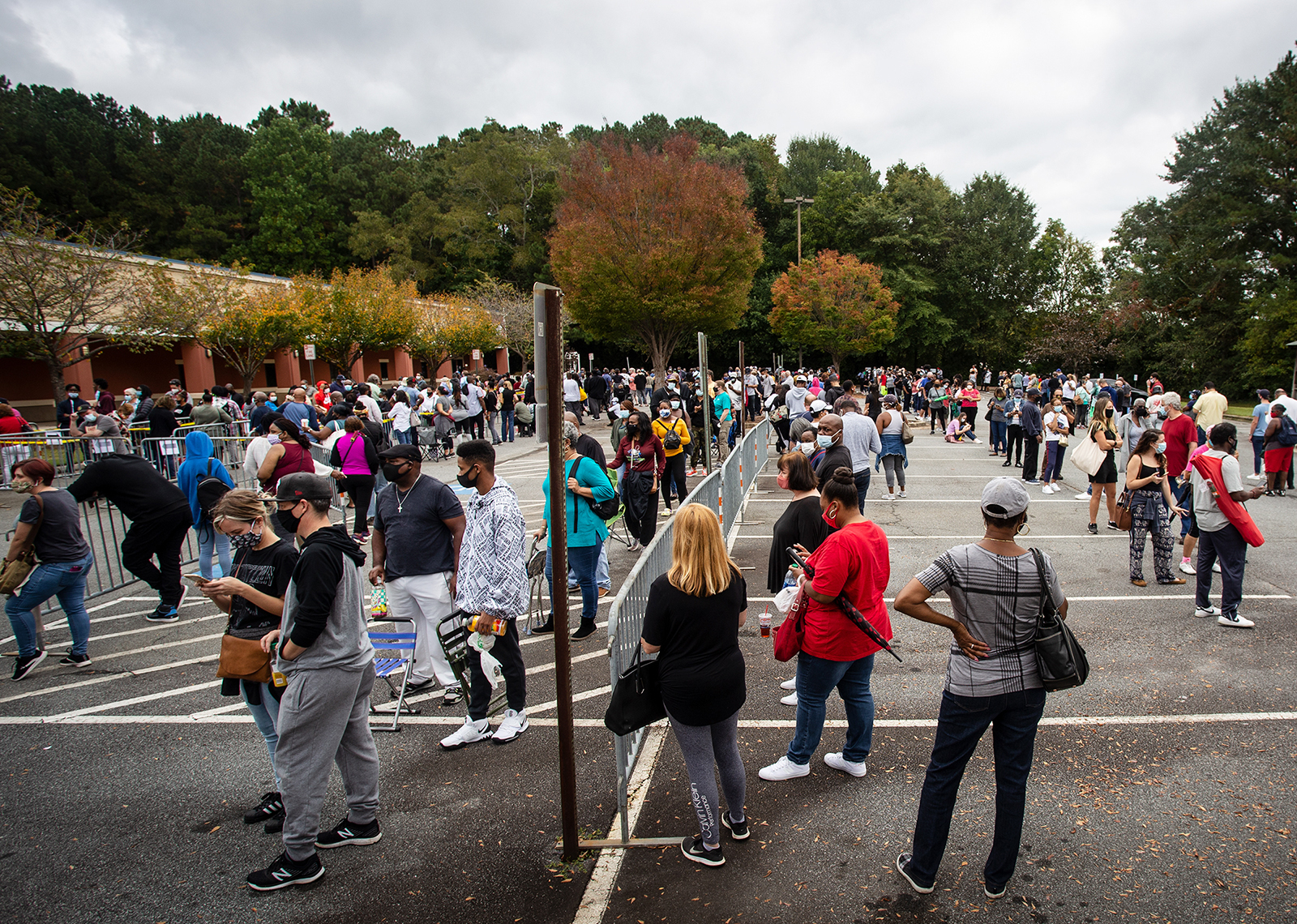 (RNS) — On the last Sunday of October, the Rev. Karl Anderson helped arrange a “Souls to the Polls” event on a blocked-off downtown street to encourage Alachua County, Florida, residents to do their civic duty ahead of Election Day.
There were candidate speeches at the bipartisan gathering, free hot dogs and hamburgers courtesy of the NAACP, with music provided by live gospel singers. Between speeches and music, clergy prayed. Some participants, wary of the coronavirus, watched from a distance in the “park and praise section.”
But the location was the main attraction.
“It was on the back street of Alachua County Supervisor of Elections office,” said Anderson, the pastor of a Church of God in Christ congregation, who also runs a marketing business in Gainesville. “All they had to do was walk over there. We had a total of 423 voters that day.”
Black voters were already ramped up to participate in the 2020 election due to warnings about voter suppression as well as the recent killings of unarmed Black people. But faith leaders said that unprecedented coordination of their get-out-the-vote efforts, such as Anderson’s, were also key to higher rates of participation and greater enthusiasm among voters.
[Model Story] They’re Not Religious. But They Oppose Abortion.
Kathryn Watson, Christianity Today
Nov. 21, 2022
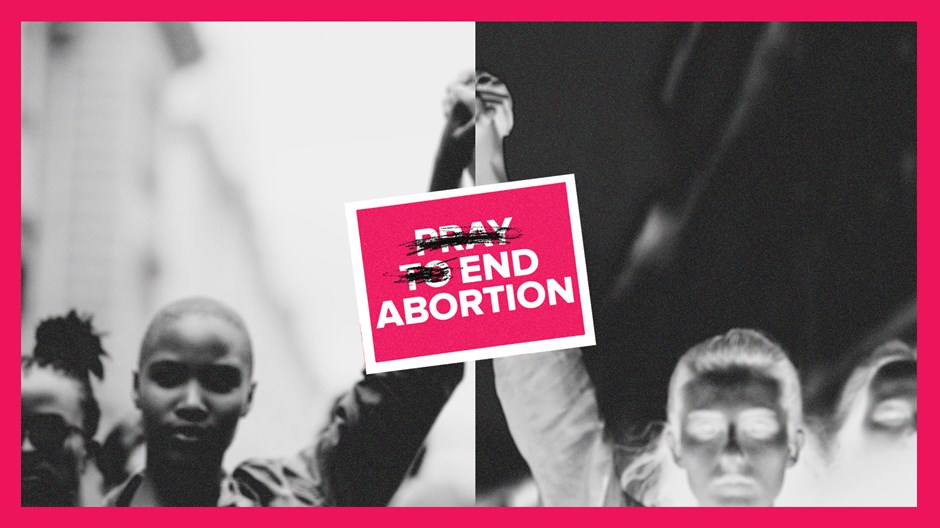 Monica Snyder gave up her childhood faith. But she never stopped being pro-life.
She opposes abortion for different reasons than her Catholic parents. Snyder doesn’t believe fetuses are made in the image of God. She doesn’t think they have eternal souls. Though her arguments differ, as an atheist with a master’s degree in forensic science from the University of California, Davis, her conclusions are the same: Human life begins with the zygote, and abortion is almost always wrong.
“Pro-choice people act as if they are morally neutral,” she said. “But abortion is not amoral.”
The executive director of Secular Pro-Life is one of a growing number of nonreligious people joining the pro-life cause. Historically, the pro-life movement has been almost exclusively religious, predominantly made up of Catholics and evangelicals. Nonreligious people—including the rising number of younger Americans who tell pollsters “none” when asked about their religious preference—generally defend a woman’s right to terminate a pregnancy.
But a 2022 Gallup poll found that 21 percent of the nones say abortion is morally wrong.
And as the pro-life movement celebrated the Supreme Court ruling overturning Roe v. Wade in June and then scrambled to fight abortion in 50 states, religious activists are increasingly finding themselves working side by side with secular allies. They welcome the support.
“The fact that these nonreligious groups are really coming alongside faith-based organizations is really significant and makes a powerful statement about where the movement is right now,” said Diane Ferraro, chief executive officer of Save the Storks, a Christian nonprofit that partners with pregnancy centers to provide free ultrasounds. “The tent is definitely getting bigger.”
Practice 2: Dive beneath the data
We will see lots of data about religious voters this year. We love it: Data is a valuable reporting resource. But if you’ve ever taken a survey you know: it’s difficult to fit your complex, deeply personal beliefs into one of the multiple choice answers. Knowing how religious groups tend to vote or which issues they claim to care about will help you know what to ask about, and to recognize outliers. But to avoid simply reenforcing divisions on the issues that divide us most, ask follow-up questions to understand the why. Don’t assume that two religious voters who voted for the same candidate did so for the same reason, ask open ended questions that will get them talking, and listen for nuance. Repeat that nuance back to them to ask them to say more. Make sure you’re seeing the whole person, not just a representative of the religious group.
Example: Instead of saying “Muslims in Michigan overwhelmingly supported Biden, despite the US support for Israel’s actions in Gaza,” try to get enough information to say something like, “Among the Muslim voters who supported Biden, some, though not all, mentioned his economic policies. More frequently, those interviewed expressed concerns about Christian Nationalism in the Republican party. Though several did mention that their support for Biden had been challenged by US backing of Israel’s action in Gaza, they said that having the Republican candidate in the White House could make things more dangerous at home.”
This will complicate simplistic narratives about what religious groups believe, because allowing someone to explain their answer is often more complex than the answer itself.
Practice 3: When reporting, find out where values come from
Sometimes religious doctrine informs the issues people care about and the candidates they vote for, such as in the case of the death penalty or abortion. Sometimes civic tradition informs their priorities, such as interpretations of the Constitution. Sometimes their geography influences their vote, especially on issues of religious freedom or school choice. All of these issues can be dressed in religious language, so ask good questions about why they support what they support, and be clear about which answers are based in religious beliefs, and which are based in the other important parts of a person’s identity.
Example: Instead of saying, “Jewish voters supported candidates who made abortion rights and school choice part of their campaign,” ask enough questions to get to something like this: “Because Judaism teaches that life begins with breath, these Jewish voters said, they plan to vote for candidates who support abortion. Some also said that they want to be able to use vouchers to pay for Jewish day schools, so school choice was important to them.”
This approach constructively complicates the oversimplified narrative of religion perfectly aligning to a political platform, or that a person’s religion dictates how they vote.
[Model Story] Young Evangelicals fight climate change from inside the church: ‘We can solve this crisis in multiple ways’
,
Sept. 30, 2023
 Ahead of September’s U.N. General Assembly in New York City, thousands of youth activists flooded the streets of Manhattan, calling for the end of the use of fossil fuels. Among them was Elsa Barron, 24, a young Evangelical Christian looking to make change in her community.
Barron, a climate research fellow at the Center for Climate and Security, a non-partisan institute of the Council on Strategic Risks, told CBS News that she is hoping to change the minds of those in her church who don’t believe in climate change. A Pew Research Center poll from 2022 found that 53% of Americans say human activity is responsible for a warming planet, but only 32% of Evangelical Christians agree. That’s the lowest amount of support from any of the religious groups surveyed, 45% of Christians said that human activity is responsible for a warming planet, and 50% of Catholics said the same. In general, Evangelical Christians are the most skeptical religious group when it comes to climate change.
“There’s a lot of emphasis on sort of God’s divine care for the world and his good plan for the world,” Barron told CBS News. “But some people kind of take that and say … ‘If you think the world is at risk, then maybe you don’t have enough trust or faith in God.’”
Barron tries to speak to her community the best way she knows how: by quoting from the Bible. With passages like Genesis 2:15, which says that “the Lord God took the man and put him in the Garden of Eden to cultivate and keep it,” she hopes to encourage peers in the church to look seriously at the impacts of climate change.
“What does loving our neighbors really look like in a world where the sorts of decisions are directly impacting people’s ability to live in their homes across the world, or to manage their crops or have food or water to drink?” Barron said.
Barron isn’t the only Evangelical Christian trying to make a difference.
[Model Story] When helping heals
Joan Lukachick Smith, Chattanooga Times Free Press
March 2016
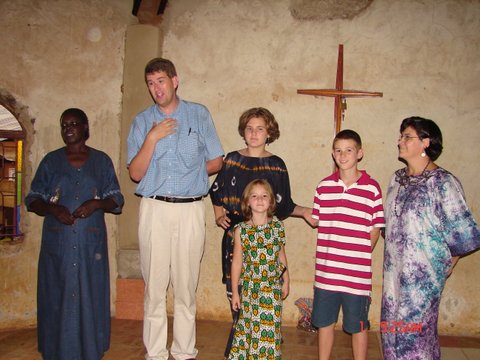 On Aug. 28, 1995, Brian Fikkert gathered the courage to send a letter detailing why he thought the modern evangelical church was broken and had forgotten a key piece of the gospel.
It was a revelation that began in his teenage years just as the cultural wars were raging. He read a book by theologian Ron Sider, one of the few people in the late 1970s calling for evangelical Christians to stand up to systemic injustice and implement policies to care for the poor. But Fikkert had witnessed the backlash as some evangelicals called Sider a left-wing socialist, discounting his message as political propaganda.
But his words stuck with Fikkert, who chose to study economics instead of going to seminary because he wanted to learn how to alleviate poverty.
After earning his doctorate in economics at Yale in 1994, he began to teach and do research at the University of Maryland. But he became discouraged by how poverty was reduced to math equations and statistical analysis. On Sundays at his Presbyterian church, he grew weary with how Christians approached the poor.
Turn to Jesus, the deacons told the single mother who came knocking on the door asking for help to pay her light bill. They would help her, yes, but then they acted as if she only needed a spiritual cure to solve her problems.
This attitude struck Fikkert as a tainted view of the gospel. To him, Christians were acting like they were closer to God because they had been blessed with comfortable lives and stable families. They appeared to feel as if they had earned what they received; and the poor, meanwhile, were dirty and broken and must be far from God.
Fikkert volunteered to teach a Sunday school class focused on teaching the purpose of the church. This led him to study the life of Christ to see how the church should follow in his footsteps. In the Bible, Fikkert read how Jesus healed the blind and healed their souls. He read how Jesus commanded a lame man to walk and forgave his sins.
“The kingdom of heaven is at hand,” Jesus said in Matthew 10:7.
Fikkert began to see how Jesus had given the answer 2,000 years prior: Grace precedes salvation.
Practice 4: Look for unlikely agreements and disagreements
When interfaith groups or coalitions form around an issue, ask them to talk about both their similarities and their differences. “We disagree on Jesus, but we agree on healthcare.” Same when you find religious groups committing to bridge political differences. “We disagree about the southern border, but our shared Muslim faith values caring for the poor.” By showing that faith can lead people to different political positions, and that others can end up in the same place without the same guiding faith, we challenge the discourse that the two-party division in the United States encompasses all of our lives, our identities. Also remember: members of religious groups don’t just internally differ on politics, sometimes they differ on specific doctrines of their religion. For instance, many Christians do not interpret the Bible literally, but many do.
Taking this line complicates the oversimplified notion of two Americas, which when accepted uncritically makes you feel like you’re about to be at war with half the country.
[Model Story] Bishop-supported leadership training for immigrants transforms parish communities
Katie Collins Scott, National Catholic Reporter
April 11, 2023
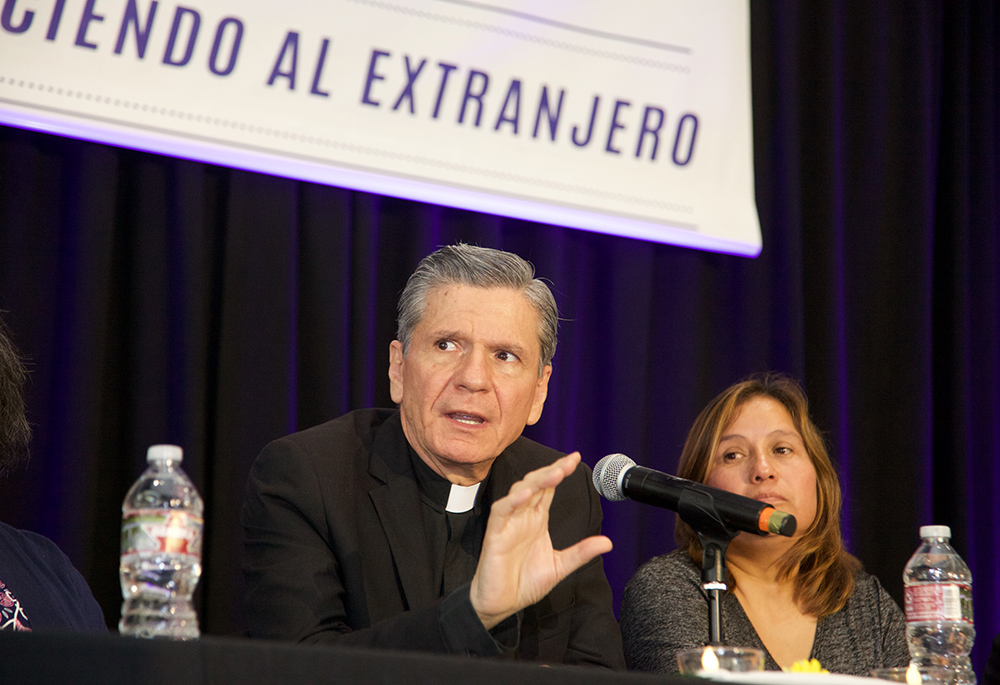 It was the start of the pandemic and Maricela Pineda, an immigrant from Mexico and mother of five, was worried about many things, foremost her children.
“My kids used to get very good grades, but when school went online the grades started coming down,” she said. “And one of my sons had depression. There were a lot of unknowns, and I was scared.”
Then Pineda began attending a training and formation program hosted at her Northern California parish, where over several gatherings, sometimes held in the parking lot as a pandemic precaution, she heard other immigrant families’ stories.
“People weren’t sure if there’d be enough food, they didn’t have money to pay rent, their kids had problems,” recalled the 52-year-old. “I realized we all had a lot in common.”
The meetings didn’t stop there. Participants not only listened to one another but also learned to address hardships — pandemic- and non-pandemic-related — in concrete ways.
“We helped around 200 families with rental assistance, filling out forms because some people don’t speak English or know how to write,” said Pineda, who’s now working with city officials to address bullying, violence and other issues in schools.
The California Catholic is one of some 4,000 individuals who has participated in a parish-centered initiative that aims to identify, train and mentor immigrant leaders and to nurture relationships between immigrant and nonimmigrant communities.
[Model Story] Evangelicals Working To Stop Climate Change
Oregon Public Broadcasting
Nov. 29, 2018
 Nov. 29, 2018
Spreaker sits down with Jason Fileta, the director of a Portland-based evangelical activist group who will deliver a petition advocating policy change from a Christian perspective at the UN Climate Change summit in Poland next week. He talks about how Micah Challenge USA and his generation are working to focus the evangelical community on the oversized effect global climate change has on poor people and on people in developing countries in order to move them to action.
Contributors
This guide, developed by Bekah McNeel, Keith Hammonds and Sandi Villareal, builds on work done by the Solutions Journalism Network. It was produced in collaboration with ReligionLink Editor, Ken Chitwood.
Learn more about Complicating the Narratives here. Contact Bekah McNeel at [email protected] and Keith Hammonds at [email protected].