


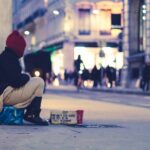
“It’s the first thing you notice about the United States,” said Bernhard Froebe, a German tourist visiting Los Angeles in the summer of 2024. “There are so many people living in the streets, on the sides of the road, in whole encampments,” said Froebe, who hails from the Saxon city of Zwickau. “It’s shocking.”
Froebe’s remarks come as no surprise to Americans, who have seen homelessness rise 40% since 2018 and rent and home sale prices soar upward of 155% over the last five years.
According to the 2024 “America’s Rental Housing” report by the Joint Center for Housing Studies of Harvard University, 22.4 million renter households spent more than 30% of their income on rent and utilities in 2022 — a record high. Together, the numbers speak to an impending sense of crisis and pessimism about the U.S. housing market.
How are faith communities responding?
In this edition of ReligionLink, we provide resources, background, related stories and relevant sources for reporting on how religion, higher rent and an increase in unhoused families and individuals intersect.
Background and resources
As intimated by Froebe, the statistics are staggering.
According to the U.S. Department of Housing and Urban Development’s 2024 Annual Homelessness Assessment Report, the number of people experiencing homelessness on a single night — 771,480 people — was the highest ever recorded. Accounting for around 2 of every 1,000 people in the country, people in families with children, individuals, unaccompanied youth, veterans and others found themselves in emergency shelters, safe havens, transitional housing or unsheltered and out on the streets.
Like the stats themselves, the factors are many: a worsening housing crisis, stagnating wages among middle- and lower-income households, systemic racism, public health crises, disasters and displacement, inflation.
After years of declines in the number of people living unsheltered or experiencing homelessness, the numbers are rising again. Dropping from nearly 650,000 in 2007 to a low of just under 550,000 in 2016, there has been a steady increase since, with numbers skyrocketing nearly 33% between 2022 and 2024 alone — from 580,462 to over 771,480.
In early 2025, numerous nonprofits and federal agencies were dealt a series of blows, as President Donald Trump signed several executive orders halting aid and slashing budgets, including that of the U.S. Interagency Council on Homelessness, which was formed in 1987 to coordinate the federal response. The cuts, experts fear, will exacerbate the problems they already were struggling to address.
Religious communities across the spectrum have responded in various ways, providing direct support to those in need. For example, Latino Muslims in Chicago have developed a program called “Neighborly Deeds,” distributing warm meals, blankets, clothes and hygiene products to those experiencing homelessness. And on the streets of Skid Row in Los Angeles, the Friars and Sisters Poor of Jesus Christ — a Catholic religious order founded in Brazil — have been ministering to recently arrived immigrants living in temporary housing or in tents along the road.
Individually, many who are unhoused turn to religious and spiritual practices, including Christian prayer, Buddhist meditation or Native-specific independent spiritual practices, as a means of protection or coping with the stress and related problems of homelessness.
Long a partner, or primary provider, to individuals and families experiencing homelessness, faith and values groups have also started to respond in more creative ways to the current crisis, looking to address more than immediate needs.
Shifting away from traditional shelters or safe havens, faith communities have started offering affordable housing: erecting microhomes on church properties, converting residences — from parsonages to convents — into units or repurposing vacant schools and parking lots. Many of the churches converting their underused land into affordable flats riff off the anti-development slogan “Not in my backyard” (NIMBY), instead advocating with the motto “Yes in God’s backyard” (YIGBY).
Meanwhile, the nonreligious organization SecularHelp runs its “Helping the Homeless” program, which it says provides direct, practical support to individuals experiencing homelessness without “relying on supernatural or faith-based approaches.”
But critics such as Americans United for Separation of Church and State lament that for many experiencing homelessness, “the only organized form of temporary shelter comes from a faith-based organization or church.” Though they can provide essential resources, Americans United wrote, churches can also use “this resource gap as an opportunity to proselytize a vulnerable population.” This issue recently came to the fore in the U.S. Supreme Court Decision in Grants Pass v. Johnson, in which Justice Sonia Sotomayor, in her dissent, questioned the religious rules around providing shelter to the unhoused.
In another case, a church providing temporary shelter around the clock in Bryan, Ohio, was found guilty of violating zoning and fire codes in local criminal court. That decision, along with a civil case against the church, is being appealed.
At the very least, the above shows the numerous religion, ethics and values angles to be explored when it comes to the United States’ rapidly growing housing crisis.
For more background and research data, see the sources below:
- Read “A look at the state of affordable housing in the U.S.,” from Pew Research Center (2024).
- Read “Religious Freedom To House The Homeless,” from the Center for Public Justice (2024).
- Read “Churching NIMBYs: Creating Affordable Housing on Church Property,” in The Yale Law Journal (2024).
- Read “Islamic identity and religious support system for Muslim homelessness,” in al-Irsyad Journal of Islam and Contemporary Issues (2022).
- Read “How Faith-Based Organizations Aid the Unhoused,” from the Home More Project (2022).
- Read “Religion and Recovery Among Individuals Experiencing Homelessness,” in Journal of Religion and Health (2021).
- Read “The Well-Being of Unhoused Individuals in Transitional Housing: A qualitative exploration of stress, spirituality and religion, and purpose and meaning,” from Stanford University (2019).
- Read “Religious and spiritual practices among homeless urban American Indians and Alaska Natives with severe alcohol problems,” in American Indian Alaska Native Mental Health Research (2017).
- Read “Faith-Based Organizations Shoulder Majority of Crucial Services and Develop Creative Solutions for Homelessness,” from Baylor University (2017).
- Read “Catholic Social Teaching and Housing and Homelessness,” from the Justice and Peace Office, Catholic Archdiocese of Sydney.
Reporting Tips and Style
As you may have already noticed, this guide uses different terms to refer to homelessness, including:
- unhoused people
- people without housing
- people experiencing homelessness
- people experiencing housing instability
According to the Homeless Crisis Reporting Project:
While these terms can be helpful and sufficient to describe homelessness in general, consider that they are usually insufficient for fully describing a person’s living situation. Homelessness is a spectrum and can assume many forms. For instance, the experience of a person sleeping in a tent on the sidewalk is vastly different than that of someone who couch surfs. We advise journalists to be as specific as possible when reporting on homelessness.
Finally, some critics argue that using people-first language draws attention away from the deeper issue of homelessness, and that alternative phrases such as “people experiencing homelessness” carry the same stigma as the term “homeless person.”
As a general rule, be sure to know what term you are using, how you are using it and refer to their full guide for more information and helpful tips.
Related newswriting
- Read “Why rents are rising too fast,” from The Economist on March 26, 2025.
- Read “UK Cathedral Dean Embarks On Camino Pilgrimage To Support The Homeless Through Music,” from Religion Unplugged on March 6, 2025.
- Read “Bill Would Fast-Track New Housing Built On Religious Properties,” from The Legislative Gazette on Feb. 28, 2025.
- Read “‘Chaos’ and ‘Confusion’ for Faith-based Nonprofits after Funding Freezes,” from Sojourners on Feb. 3, 2025.
- Read “Ohio pastor convicted in dispute over sheltering homeless vows to continue his mission,” from The Associated Press on Jan. 24, 2025.
- Read “Ken Paxton vows to shut down Texas church’s homeless ministry in new suit,” from the Houston Chronicle on Nov. 28, 2024.
- Read “At Bible Study for the Homeless, A Search for Meaning,” from The New York Times on Nov. 24, 2024.
- Read “Why Turning Churches Into Housing Is So Hard,” from Bloomberg on Sept. 24, 2024.
- Read “Burien faces another homelessness lawsuit, this one about religion,” from The Seattle Times on Sept. 2, 2024.
- Read “As more migrants end up on Skid Row, a Catholic order seeks to help,” from Sojourners on July 22, 2024.
- Read “Appeals court hears Christian homeless shelter’s challenge to Washington anti-discrimination law,” from The Associated Press on July 20, 2024.
- Read “The Supreme Court’s homelessness decision will decimate the faith-based nonprofit sector,” from the Forward on July 2, 2024 (Commentary).
- Read “Yes in God’s backyard? This housing solution may be the answer to your prayers,” from Vox on June 18, 2024.
- Read “Faith Leaders Raise Call for Housing, Not Handcuffs,” from Word in Black on April 30, 2024.
- Read “Do homeless people have constitutional rights?” from RNS on April 22, 2024 (Commentary).
- Read “Connecting With God And Others: How Chaplains Support Denver’s Unhoused,” from Religion Unplugged on March 5, 2024.
- Read “Faith-based institutions take on the affordable housing crisis,” from Smart Cities Dive on Feb. 20, 2024.
- Read “The spiritual lives of the unhoused,” from The Washington Post on Jan. 21, 2022.
- Read “On Homelessness, Mayor Eric Adams Needs a Little Religion,” from The New York Times on April 15, 2022 (Commentary).
- Read “Public libraries and faith-based organizations join forces to address homelessness,” from The Conversation on Oct. 19, 2021 (Analysis).
Relevant sources
-
Joshua D. Ambrosius
Joshua D. Ambrosius is a professor at the University of Dayton. He regularly teaches courses related to urban housing and faith-based social policy and innovative, interdisciplinary approaches to space exploration.
-
Chelsea Langston Bombino
Chelsea Langston Bombino is a program officer with the Fetzer Institute and a fellow with the Center for Public Justice. She has written on the intersection of religious freedom and homelessness. She is also a contributing writer for Religion Unplugged and contributing author to Breaking Ground: Chartering Our Future in a Pandemic Year and The Routledge Handbook of Religious Literacy, Pluralism and Global Engagement.
-
Coalition for the Homeless of Central Florida
The Coalition for the Homeless of Central Florida provides services to the area’s homeless, with support from individuals, businesses, philanthropic and faith-based groups. Contact Trinette Nation.
-
Faith in Affordable Housing
The Faith in Affordable Housing project works with churches of all denominations in England and Wales to release surplus land or redundant buildings for the development of new social and genuinely affordable homes.
-
Hebah Farrag
Hebah Farrag is grants and impact assessment manager at Legal Aid at Work. Farrag is the former assistant director of research at the University of Southern California’s Center for Religion and Civic Culture, where she managed projects such as the Spiritual Exemplars project, a global initiative on engaged spirituality, which is tasked with collecting 100 profiles of exemplary people working to promote human flourishing.
-
Found House Interfaith Housing Network
Found House Interfaith Housing Network provides emergency shelter and housing programs for homeless families in Cincinnati and surrounding areas. Stacey Hall Burge is chief executive officer.
-
Benedict Giamo
Benedict Giamo is an associate professor of American studies at the University of Notre Dame in Notre Dame, Indiana. He has written about the spiritual in the works of Jack Kerouac and teaches a course about Kerouac and other Beat writers. He is the author of several books: On the Bowery: Confronting Homelessness in American Society; Beyond Homelessness: Frames of Reference; The Homeless of Ironweed; Kerouac, the Word and the Way: Prose Artist as Spiritual Quester; Notes from the Bowery; and Homeless Come Home: An Advocate, the Riverbank, and Murder in Topeka, Kansas.
-
Homeless Dharma Network
The Homeless Dharma Network is a socially engaged Buddhist organization dedicated to the poor, disadvantaged and those experiencing homelessness in Santa Cruz, California. Founded in the fall of 2011 by Stephen Conover (Sonam Dorje), HDN began by offering a Buddhist meditation and study group weekly at the Homeless Services Center in Santa Cruz.
-
Homeless and Housing Resource Center
The Homelessness and Housing Resource Center was established in August 2020 with funding from the Substance Abuse and Mental Health Services Administration. Operated by Policy Research Inc., HHRC works in partnership with national experts in homelessness, mental health and substance use services to be a centralized hub of easily accessible, no-cost training for health and housing professionals in evidence-based practices that contributes to housing stability, recovery and an end to homelessness.
-
JoCo IHN
JoCo IHN (formerly Johnson County Interfaith Hospitality Network) is a nonprofit coalition of congregations in Johnson County, Kansas, that provides services to homeless families.
-
Stephen “Cue” Jn-Marie
Stephen “Cue” Jn-Marie is a former Virgin Records rapper, turned evangelist, activist and organizer, who left the music industry in 1994 to become a pastor. He is founder of the Row — also known as “the Church Without Walls”, or as some of our parishioners like to call it, “the Street Church” — in Los Angeles’ Skid Row, which is home to the nation’s largest population of homeless people, with 11,000 currently on its 25 blocks of streets or shelters.
-
Louisville Coalition for the Homeless
The Louisville Coalition for the Homeless serves the homeless population of Louisville, Kentucky, by educating the community about homelessness, advocating for system changes and coordinating the community response. Natalie Harris is executive director.
-
Muslims Against Hunger Project
The Muslims Against Hunger Project is a North American network of volunteer communities to involve Muslims in efforts to combat hunger and homelessness.
-
National Alliance to End Homelessness
The National Alliance to End Homelessness is a Washington, D.C.-based nonpartisan, nonprofit organization committed to preventing and ending homelessness in the United States. Its website also has regularly updated statistics and information on homelessness in America.
-
National Center on Family Homelessness
The National Center on Family Homelessness, based in Washington, D.C., as a part of American Institutes for Research, is dedicated to helping homeless families. Its website includes resources for media members interested in homelessness. Contact Barbara Broman.
-
National Coalition for the Homeless
The mission of the National Coalition for the Homeless is to end homelessness. It posts facts about homelessness in America and a page of links to other organizations dealing with homelessness.
-
National Coalition for Homeless Veterans
The National Coalition for Homeless Veterans looks to end homelessness among veterans by shaping public policy, promoting collaboration and building the capacity of service providers. The coalition’s website offers statistics, background, news and experts on homelessness among veterans. Media contact is David Higgins Jr.
-
National Homelessness Law Center
The mission of the Law Center is to prevent and end homelessness by serving as the legal arm of the nationwide movement to end homelessness. It is based in Washington, D.C.
-
New Hampshire Coalition to End Homelessness
The New Hampshire Coalition to End Homelessness, a nonprofit organization with headquarters in Manchester, New Hampshire, was founded in 1990. It organizes leaders in the state to research solutions on ending homelessness, educate providers on best practices and empower people to advocate on behalf of the homeless.
-
Northeast Ohio Coalition for the Homeless
The Northeast Ohio Coalition for the Homeless is a nonprofit coalition of service providers, housing activists, members and homeless people that looks for solutions to homelessness.
-
Kevin M. Nye
Kevin M. Nye is a writer and advocate based in Minneapolis, where he works as housing director at an organization addressing youth homelessness. He has written on faith and homelessness for RNS, Sojourners and Red Letter Christians. He is the author of Grace Can Lead Us Home: A Christian Call to End Homelessness.
-
Room in the Inn
Room in the Inn is a coalition of nearly 200 congregations in Nashville, Tennessee, that provide shelter and other services to the city’s homeless. It has become a model for similar programs around the South. Contact executive director Rachel Hester.
-
Sai Datta Peetham and Cultural Center
Sai Datta Peetham and Cultural Center distributes food to homeless shelters in the Edison, New Jersey, area through its “Sandwich Seva & Fruit Distribution” program.
-
SecularHelp
SecularHelp, also known as Secular Helping People Alliance, was founded with the mission of empowering people to find purpose and meaning free from the influence of religious, supernatural or pseudo-scientific beliefs. It offers secular meditation, legacy counseling and, through its Helping the Homeless program, direct, practical support to individuals experiencing homelessness. The president and executive director is Mark W. Gura.
-
Najuma Smith-Pollard
Najuma Smith-Pollard is Assistant Director of Community and Public Engagement with the USC Center for Religion and Civic Culture. She is also a pastor, community activist and program lead for the Cecil Murray Center for Community Engagement, which is housed at CRCC.
-
Temple Beth Am
Temple Beth Am is a Reform congregation in Seattle that has been helping families avoid homelessness since 2004. The congregation’s Homeless 2 Remain helps families secure or maintain safe housing. In collaboration with Jewish Family Services, the congregation provides eviction prevention assistance aimed at keeping families in their homes. Contact is Sue Covey. The congregation also helps Sound Foundations NW, which builds “tiny homes” that the Low Income Housing Institute and others use to build tiny-home villages.
-
U.S. Interagency Council on Homelessness
The U.S. Interagency Council on Homelessness was formed in 1987 to coordinate the federal response to homelessness. It works to create a national partnership at every level of government and with the private sector to reduce and end homelessness in the nation while maximizing the effectiveness of the federal government in contributing to that end. Its budget was slashed by an executive order signed by President Donald Trump on March 14, 2025.
-
Jonathan Wilson-Hartgrove
The Rev. Jonathan Wilson-Hartgrove is an author, preacher and religious activist. He is the co-founder of Rutba House, an intentional community in Durham, North Carolina, aimed at breaking down divides between the homeless community and other residents. He serves as assistant director for partnerships and fellowships at Yale University’s Center for Public Theology and Public Policy.