


With just a few months to go until the U.S. holds elections on Nov. 5, 2024, reporters covering the intersections of religion and politics will face a common challenge: how to write about the varied politics of people of faith and cover the diverse roles religion(s) will play in this election.
White evangelicals, and the conflation of their faith with political conservatism in general, tend to dominate religion-related election news, to the neglect of other religious communities — Christian and otherwise.
In this edition of ReligionLink, we take a different approach. Rather than focusing on any one tradition, we break down ideas, sources and resources for reporting on the top issues at stake in the 2024 election(s).
Looking at seven issues from the perspective of diverse faith traditions in the U.S. — and the particular intersection of identifications, institutions and ideals they represent — helps us better get a sense of how religion may, or may not, play a role in determining the shape and outcome of this year’s vote.
Tips for reporting
When it comes to the relationship between the U.S. electorate and national news outlets, it’s complicated. While, according to a poll from the American Press Institute and The Associated Press-NORC Center for Public Affairs Research, the majority of Americans will rely on the news media to inform themselves ahead of the 2024 elections, 53% say they are extremely, or very, concerned that those same news organizations will report inaccuracies or misinformation during the election. The poll also revealed some disconcerting trust issues around generative artificial intelligence stories, concerns about unconfirmed or unverified information and biased presentation of accurate information.
Religion reporters may be most concerned with the issue — or accusation — of bias on our beat. As the Solutions Journalism Network shares, much of the reporting around religion and politics is overly simplistic and far too familiar. In their “Faith and Politics” guide, Bekah McNeel, Keith Hammonds and Sandi Villareal wrote that as we look ahead to the 2024 election cycle, “[w]hat will likely emerge is a version of events we’ve seen before, one that conflates political conservatism with evangelicalism and fails to consider the values of religious groups that don’t make up such a powerful voting bloc.”
These narratives, they write:
are not adequate to describe either the political diversity among people of faith, nor the religious diversity of American voters. They at once fail to accurately reflect the reality of people of faith — which risks disengaging or alienating those people — and produces a narrative that is of little value to people trying to understand, much less predict, where an election is pointed.This is not good for a democracy scrambling to find its last scraps of common ground, nor is it good for the relationship between journalists and faith communities.
They shared four practices we think ReligionLink readers might take into consideration as they prepare their own coverage over the next few months:
- Practice 1: Separate political and religious descriptors. Words such as “conservative” and “liberal” carry a lot of baggage and multiple meanings. To complicate the narrative that conflates religion with a particular kind of politics (or vice versa), the guide’s authors recommend using more specific language that properly distinguishes between the two.
- Practice 2: Be specific about where values come from. Religion nerds will appreciate this already, but it is important to get different traditions’ doctrine(s) right. If individual voters say that their politics are informed by their religious beliefs, values or practices, be sure to ask good questions as to why and how. Moreover, always seek to understand sources as whole people, with various motivations for why they vote one way or another, rather than as simply a “Jewish” or “Muslim” voter. Doing so, the guide’s authors write, “will simplify the storytelling by keeping the religion from being distorted to explain things it doesn’t” and “complicate the oversimplified narrative of religion perfectly aligning to a political platform, or that a person’s religion dictates how they vote.”
- Practice 3: Dive beneath the data. Data-based journalism can be really good. It can also be really popular. But overcome the temptation to report the data alone. There are contextual complexities, personal proclivities and textured daily realities and relationships that aggregated data may not be able to get at. Remember to go beyond the numbers and get at the deeply personal, devotional and community-based values and motivations that are driving voters to make the political choices they are making.
- Practice 4: Look for unlikely agreements and disagreements. The relationship between the U.S. electorate and national news outlets isn’t the only complicated one out there in America. Find those tension-filled, seemingly contradictory and strange-bedfellow stories and run with them. If you can tell a more complicated narrative about the coalitions that are created around specific issues or faith-based values, you actually simplify things for readers, write the authors, by allowing America’s “diversity to represent itself,” rather than forcing ill-fitting, diametrically opposed categories onto the story. At the same time, interrogate interfaith agreements and question convenient coalitions, not only focusing on similarities, but teasing apart the underlying tensions and differences within them. This not only makes for a better story, it presents a more accurate picture of our multipolar nation.
The top seven issues
In this Source Guide, we outline the faith angles on some of the biggest issues on voters’ mind ahead of U.S. elections in 2024, providing talking points, polling data, in-depth resources and suggested sources on:
- The economy
- Immigration
- Culture wars
- Reproductive rights
- Foreign policy
- Climate change
- Crime and public safety
And, what about democracy itself?
1. The economy ... stupid
 In poll after poll after poll, the economy (especially inflation and the price of staples like housing or food) appears to be at the top of voters’ minds in the lead-up to the 2024 elections. Back in 2016, negative feelings about the economy helped swing the election in Donald Trump’s favor — and may do so again in 2024, as white working-class voters’ fears about displacement and economic fatalism may once more spur their support for the former president.
Therein lies the first potential religion angle when it comes to the economy and the 2024 elections. According to American National Election Studies data and Public Religion Research Institute data, almost half (45%) of white 2020 voters without a college degree were white evangelicals.
But beyond the oft-covered “white evangelical vote,” which comprised about 28% of the overall electorate in 2020, there are other economy/religion angles to consider. How might socially conservative, financially prudent and pro-business Muslim migrants in states such as Michigan and Florida help sway the election? What about generally highly educated, financially successful Hindu communities? Or, for that matter, swaths of Black and Latino voters of different faiths, among whom the “last few years’ economic tumult has been particularly pronounced,” according to Christian Paz at Vox. Paz also wrote how “Joe Biden continues to underperform among Black and Latino Americans,” and their views on his handling of the economy might offer insight into that dip in support from traditional Democratic bases.
Each of these angles deserves careful reporting in the months to come. Here are a few related resources to help you do so:
Related ReligionLink Content:
- Recession religion: Experts on the intersection of faith and finance
- Five religion stories to cover postelection
- The economics of religion
- The faith-based initiative 2.0: Obama’s new approach
- Learning money skills in houses of worship
Sources on religion and the economy
-
Center for Poverty Research
The Center for Poverty Research is at the University of Kentucky. James P. Ziliak, who holds the Gatton Endowed Chair in Microeconomics, is director.
-
Brian Grim
Brian J. Grim is president of the Religious Freedom & Business Foundation, which makes the case that religious freedom is good for business. Formerly at Pew Research Center, Grim is a leading expert on the socioeconomic impact of restrictions on religious freedom and international religious demography.
-
Sriya Iyer
Sriya Iyer is a professor of economics and social science at the University of Cambridge and a professorial fellow of St. Catharine’s College. Her research is in the fields of development economics, economics of religion, health and education. For the past decade, she has been contributing to developing a new field of research called the economics of religion, in which she uses economic methods to study religion.
-
Ben Witherington III
Ben Witherington III is a professor of New Testament at Asbury Theological Seminary in Wilmore, Kentucky. A prolific author and an ordained minister, Witherington can talk about the historical tensions between Christians and Jews and current cultural manifestations of those tensions. He is the author of Jesus and Money: A Guide for Times of Financial Crisis, an examination of “what Jesus has to say (and doesn’t say) concerning wealth and poverty, money and spending, debt and sacrificial giving.”
2. Immigration

In Wisconsin, a key swing state, immigration is the second most important issue among likely voters, according to an early April poll by Marquette University’s Law School. Of those, around 53% feel Trump would do a better job on immigration and border security; just 28% say the same about Biden. Immigration remains a key issue in other swing states as well, from Georgia (second most important issue, according to a March Marist poll) to Nevada (second, according to a February survey from Emerson College), Michigan (second, according to the same poll) to Arizona, where concerns about unauthorized immigration and drug trafficking on the one hand, and the adverse economic and humanitarian impact of strict border policies on the other, find deep resonance with over 342,000 border encounters since Oct. 1, 2023, according to DHS data.
Across the nation, faith-based organizations and migrant ministries are providing assistance to migrants and advocating for immigrant justice — hoping that the outcome of the 2024 elections might bring a breakthrough in the deadlock that has resulted in no major immigration reform legislation being passed since 1986 (the Immigration Reform and Control Act).
Meanwhile, a strong contingent of white Christian voters feels that what is happening at the southern U.S. border constitutes a crisis. According to data from a March 2024 Pew Research Center report, 70% of white evangelical Protestants, 64% of white Catholics and 57% of white nonevangelical Protestants view it as a crisis. Much smaller numbers of Black Protestants and the religiously unaffiliated felt the same.
Among those polled, white evangelical Protestants were more likely than any other religious groups to say the situation at the border is leading to more crime in the country (82%). “Smaller but still substantial majorities of White Catholics (70%) and White nonevangelical Protestants (69%) say the same,” reported Pew.
At the same time, a diverse coalition of religious actors desire immigration reform with increasing urgency. According to a recent Lifeway Research poll, even evangelicals want immigration reform now. Showing a marked increase from prior years, 77% of poll respondents say it is important that Congress passes significant new immigration legislation in 2024 — up from 71% in 2022 and 68% in 2015.
There are also a range of religious communities and interreligious organizations providing education on the issue and engaging in advocacy for progressive policy at the state and federal levels. Some have come under increased pressure in recent months, as did Annunciation House in El Paso, Texas. According to Sojourners:
On Feb. 7, representatives from Texas Attorney General Ken Paxton’s office came to Annunciation House, seeking records from their director Ruben Garcia and claiming the Catholic charity was engaged in “alien harboring, human smuggling, and operating a stash house.” In legal proceedings, the attorney general’s office said it considers it a crime for the organization to provide shelter.
The attorney general’s office has since requested an injunction to shut down the shelter.
With ongoing legal and linguistic wrangling continuing, the numbers continue to rise and voters of faith, regardless of persuasion, all seem to agree on one thing: the need for reform. Whether that happens might very well depend on the 2024 election … and voters of faith who will vote based on the issue up and down the ballot.
Related ReligionLink content:
- Religion, immigration and the Trump administration
- Sanctuary movement 2.0
- Immigration reform: Religious voices add to growing momentum
- Faith groups push on immigration: the DREAM act
- Religion informs immigration debate
Sources on faith and immigration
-
Lloyd D. Barba
Lloyd D. Barba is a historian of religion in the Americas with training in Latinx history; American race, ethnicity and immigration; and the American West/Mexico borderlands. His scholarship on Mexican farmworkers in California (1906-1966) is based on oral histories and extensive archival research.
-
Center for Immigration Research
The Center for Immigration Research is housed in the sociology department at the University of Houston and previously had a Religion and Migration Project.
-
Center for Immigration Studies
The Center for Immigration Studies is a nonpartisan research organization in Washington, D.C. Many of its researchers have concluded that current high levels of immigration are harming the country. The organization says it’s not anti-immigrant, however; instead, it favors a policy of fewer immigrants but a “warmer welcome for those who are admitted.” Mark Krikorian is executive director.
-
Kaji Dousa
The Rev. Kaji Dousa is senior pastor for Park Avenue Christian Church in New York City. She sued the Trump administration in 2019, arguing that the government violated her religious freedom rights by putting her on a watchlist in response to her immigration-related activism.
-
Federation for American Immigration Reform
The Federation for American Immigration Reform is a nonprofit group that advocates for immigration reform, including heightened border security, revised immigration levels and a halt to illegal immigration. It advises city and state officials and activists against sanctuary policies in the belief that they are illegal and counterproductive to immigration reform. Its website sketches a history of noncompliance with immigration law, including the sanctuary movement. It also lists local immigration groups for many states. Joey Chester is communications manager.
-
Global Refuge
Global Refuge — formerly Lutheran Immigration and Refugee Service — offers refugee resettlement, immigrant legal aid and inclusion programs, asylum assistance, mental health services for migrants, crisis response and advocacy on behalf of American newcomers. Krish O’Mara Vignarajah is president and CEO.
-
HIAS
HIAS, originally known as the Hebrew Immigrant Aid Society, has worked since 1881 to provide rescue, resettlement and reunion services to Jews in need throughout the world and to other oppressed migrants. Its headquarters are in Silver Spring, Maryland. Mark Hetfield is president, and Beth Oppenheim is CEO.
-
Interfaith Immigration Coalition
The Interfaith Immigration Coalition is a group of faith-based organizations that work for immigration reform and justice. Its umbrella covers 500 national and local faith-based organizations and individuals and includes Mennonite, Jewish, Catholic, Christian, Quaker and Unitarian groups.
-
Migration Policy Institute
The Migration Policy Institute is a nonprofit and nonpartisan organization that studies migration issues and U.S. immigration policy. Its National Center on Immigrant Integration Policy maintains a “data hub” with information on migration patterns to the U.S. and on immigrants living here and elsewhere around the world. The media contact is Michelle Mittelstadt.
-
Mae M. Ngai
Mae M. Ngai is a professor of Asian American studies and history at Columbia University. Her area of study is U.S. legal and political history with a particular interest in immigration, citizenship and nationalism. She wrote an April piece in The Atlantic titled “Racism Has Always Been Part of the Asian American Experience.”
-
Grace Yukich
Grace Yukich is a sociology professor at Quinnipiac University. Her areas of expertise include religion, immigration, culture, race and ethnicity, social movements and politics.
3. The culture wars

In the U.S., the flashpoints of culture wars have shifted over the years and included everything from abortion to pornography, homosexuality to multiculturalism. The front in this election year’s conflicts over values, morality and lifestyle has coalesced around issues related to gender, race and sexuality, especially as they are taught or represented in schools, libraries and other public institutions.
And while there are religion angles aplenty to cover in this election cycle’s culture war conflicts, reporters might also consider how their reporting can often make the culture wars’ importance a bit overblown or manufactured. Too often, culture war coverage focuses on more conservative voices, marginalizing religious actors advocating for progressive change.
Or, by treating culture war issues as the religion story in an election year, reporters can lose sight of other important religion and politics angles that may influence the outcome of the vote (see above and below). By putting too much focus on the culture wars, reporters can take partisan divides for granted and blind themselves to the more complex dynamics of faith and politics.
It will still be vital to cover how religious actors are part of the push for anti-transgender policies or banning “woke-ness,” diversity, equity and inclusion programs or critical race theory. But ReligionLink challenges reporters to look beyond familiar clashes over social issues to appreciate the ways in which faith has fueled 20th-century U.S. politics beyond predictable partisan divides and across a spectrum of debates ranging from environment to labor, immigration to civil rights, domestic legislation to foreign policy.
Related ReligionLink Content:
- Freedom of belief or discrimination?: Indiana, Arkansas measures spotlight RFRA
- Back to school: Five ways to cover the new academic year
- What’s next? Experts on LGBTQ rights vs. religious protections after Supreme Court foster-care ruling
- Public schools wrestle with sexual orientation issues
Sources on religion, sexuality and culture wars
-
Montse Alvarado
Montse Alvarado is a former vice president and executive director of the Becket Fund for Religious Liberty, through which she represented a wide variety of religious ministers, schools, prisoners and hospitals before the Supreme Court. She is now president and COO of Eternal Word Television Network’s news division, EWTN. Contact is Michelle Laque Johnson, director of communications at EWTN Global Catholic Network.
-
Anthea Butler
Anthea Butler is the Geraldine R. Segal Professor in American Social Thought and chair of religious studies at the University of Pennsylvania. A historian of African American and American religion, she specializes in the history of Pentecostalism and is the author of White Evangelical Racism: The Politics of Morality in America.
-
Shirley Hoogstra
Shirley Hoogstra is president of the Council for Christian Colleges and Universities. She has argued that expanding nondiscrimination protections for the LGBTQ community without expanding religious freedom protections would threaten the future of religious schools.
-
Joanna Malone
Joanna Malone is a research coordinator at the LASAR (Learning About Science and Religion) research team at Canterbury Christ Church University. Her doctoral research focused on the experiences, understandings and significance of nonbelief for older adults in the U.K. Her research interests include belief and nonbelief, nonreligion and aging. Malone is co-deputy editor of the NSRN Blog and is part of the British Sociological Association Sociology of Religion Study Group committee acting as PGR/ECR liaison officer.
-
Jonathan Merritt
Jonathan Merritt writes and speaks extensively on faith and culture and is a senior columnist for Religion News Service. Merritt’s books include A Faith of Our Own: Following Jesus Beyond the Culture Wars and Jesus Is Better Than You Imagined. He can discuss the viewpoints and concerns of young evangelicals on a range of issues, especially on sexuality and sexual identity and the environment. He lives in Brooklyn. Contact through his website.
4. Reproductive rights

Since that monumental decision, dozens of Republican-governed states have imposed new restrictions on abortion access, with 14 states imposing near or total bans and other states restricting access more than before.
But there has also been a growing sense that the decision might be more of a political liability. Every statewide ballot question put to voters — a total of seven, including in conservative states such as Kansas, Kentucky and Ohio — has ended in victory for those championing reproductive rights. That backlash also limited Republican gains during the 2022 midterm elections and helped get Democrats in states such as Virginia and Kentucky elected.
Heading into the 2024 campaign, Trump has seemingly struggled to advance a position that can please those within his voting bloc who want to keep abortion more accessible and some Christians — namely white evangelical Protestants, Latter-day Saints and Jehovah’s Witnesses — who maintain a stronger position on restricting access to abortion.
As you report, keep in mind the diverse ways that faith informs voters’ positions on abortion access. A May 2024 Public Religion Research Institute survey underscores that the vast majority of Unitarian Universalists (93%), Jews (81%) and Buddhists (79%) believe abortion should be legal in all or most cases. And 60% of Muslims agree.
This year, reproductive rights will again prove a key topic in election campaigns, from the federal to the local level. In key swing states such as Arizona, Florida, Michigan, Nevada and Ohio, it could even prove to be the defining issue.
Related ReligionLink Content:
- Forty years of Roe v. Wade: Covering the ongoing debate over abortion
- President Trump: Tips for covering religion in the new administration
- Beyond ‘Octomom’: Emerging issues in assisted reproduction
- A guide to covering abortion issues
Sources on religion and reproductive rights
-
Catholics for Choice
Catholics for Choice was founded in 1973 to give a voice to those “who believe that the Catholic tradition supports a woman’s moral and legal right to follow her conscience” on matters of reproductive health.
-
Karma Lekshe Tsomo
Karma Lekshe Tsomo is a lecturer in the department of religion and ancient civilizations at the University of Hawaii at Manoa. Her research interests include women in Buddhism, death and identity, Buddhist feminist ethics, Buddhism and bioethics, Buddhist social ethics and Buddhist transnationalism.
-
National Council of Jewish Women
The National Council of Jewish Women is a faith-based nonprofit that works for women’s rights, reproductive freedom and child welfare through offices in New York; Washington, D.C.; and Israel. Sheila Katz is Chief Executive Officer.
-
Michael Salemink
Michael Salemink is executive director of Lutherans for Life, a nonprofit that organizes Lutherans to advocate for issues concerning the “sanctity of life.”
5. Foreign policy
 “To ignore religious views and leaders in U.S. foreign policy,” writes scholar Peter Mandaville, “would be to ignore a major part of what shapes societies, as religious actors often act as an anchor for communities and occupy a position of trust and influence.”
While a lot of recent focus has been directed at two religiously tinged conflicts — the Russia-Ukraine war and the Gaza war — religion is a potent theme when it comes to numerous flash points on the global stage. From conflicts in Armenia and Azerbaijan or Northern Nigeria to religious relations across the Taiwan Strait and ongoing religious freedom cases — like the Uyghurs in China or Rohingya in Myanmar –religion pervades international relations and plays a major role in shaping the issues American diplomats and politicians have to address.
As early as the 1990s, authors such as Barry Rubin pointed out how the U.S. and other policymakers too often ignored the impact and influence of religion in international affairs.
Organizations such as Religions for Peace — a multireligious platform with representation from diverse religious institutions and communities — and the U.N.’s own Interagency Task Force on Religion and Sustainable Development have sought to reverse that trend and bring religious actors to the policymaking table.
As perspectives on foreign policy enter the debates ahead of the 2024 elections, religion reporters would be wise to explore the myriad religion angles at play — and not only from how American religious communities may shape U.S. perspectives on foreign policy, but how trends in worldwide religion increasingly shape the realities of global politics and influence American domestic politics thanks to transnational connections between diaspora populations and their homelands.
According to political scientist Thomas Ambrosio, it is important for reporters to consider specific groups, and why or how they influence policy — think Muslim Americans and the tensions they feel over U.S. policy in Gaza, or oil interests and Armenian lobbies coming to loggerheads over the issue of Nagorno-Karabakh, or how Iraqi and Afghan exiles influence U.S. foreign policy.
Each of these may play a role in influencing how voters of faith use their voice in 2024.
Related ReligionLink Content:
- Reporting on rising antisemitism and Islamophobia
- Spiritual statecraft: Resources for reporting on religion and diplomacy
- Hindu nationalism: A roundup of reporting and resources
- Christian nationalism worldwide: A roundup of reporting and resources
- War in Ukraine: Covering the conflict’s religious contours
Resources on religion and foreign policy
-
Council on Foreign Relations
The Council on Foreign Relations is an independent, nonpartisan membership organization, think tank and publisher dedicated to helping its members better understand the world and the foreign policy choices facing the United States and other countries.
-
Bani Dugal
Bani Dugal is the principal representative of the Bahá’í International Community to the U.N. As part of the community of international nongovernmental organizations at the U.N. since 1994, she is currently serving on the steering committee of the NGO Working Group on the Security Council.
-
FoRB Women’s Alliance
FoRB Women’s Alliance is an international community of religious freedom and human rights advocates seeking to advance, facilitate and support solutions for freedom of religion or belief for women.
-
Palwasha L. Kakar
Palwasha L. Kakar is the interim director for religion and inclusive societies at the U.S. Institute of Peace. Kakar joined USIP after four years with the Asia Foundation, where she was the Afghanistan director for women’s empowerment and development. Before that, Kakar led the Gender Mainstreaming and Civil Society Unit in the United Nations Development Program’s Afghanistan Subnational Governance Program, managing a small grants program for Afghanistan’s civil society initiatives. Kakar also served as program manager for the Gender Studies Institute at Kabul University. She has experience working with the World Bank Group on gender, social justice and environmental issues surrounding their various projects in the region.
-
Peter Mandaville
Peter Mandaville is a professor of international affairs and a senior fellow at the Ali Vural Ak Center for Global Islamic Studies at George Mason University in Virginia. He writes on political Islam and the origins of mainstream Islamism. As a senior visiting expert at the U.S. Institute of Peace with the religion and inclusive societies team he has written on the ongoing conflicts between Russia and Ukraine.
-
Erin D. Singshinsuk
Erin Singshinsuk serves as executive director of the U.S. Commission on International Religious Freedom. She is responsible for directing the day-to-day operations of the commission and managing its staff.
6. Climate change
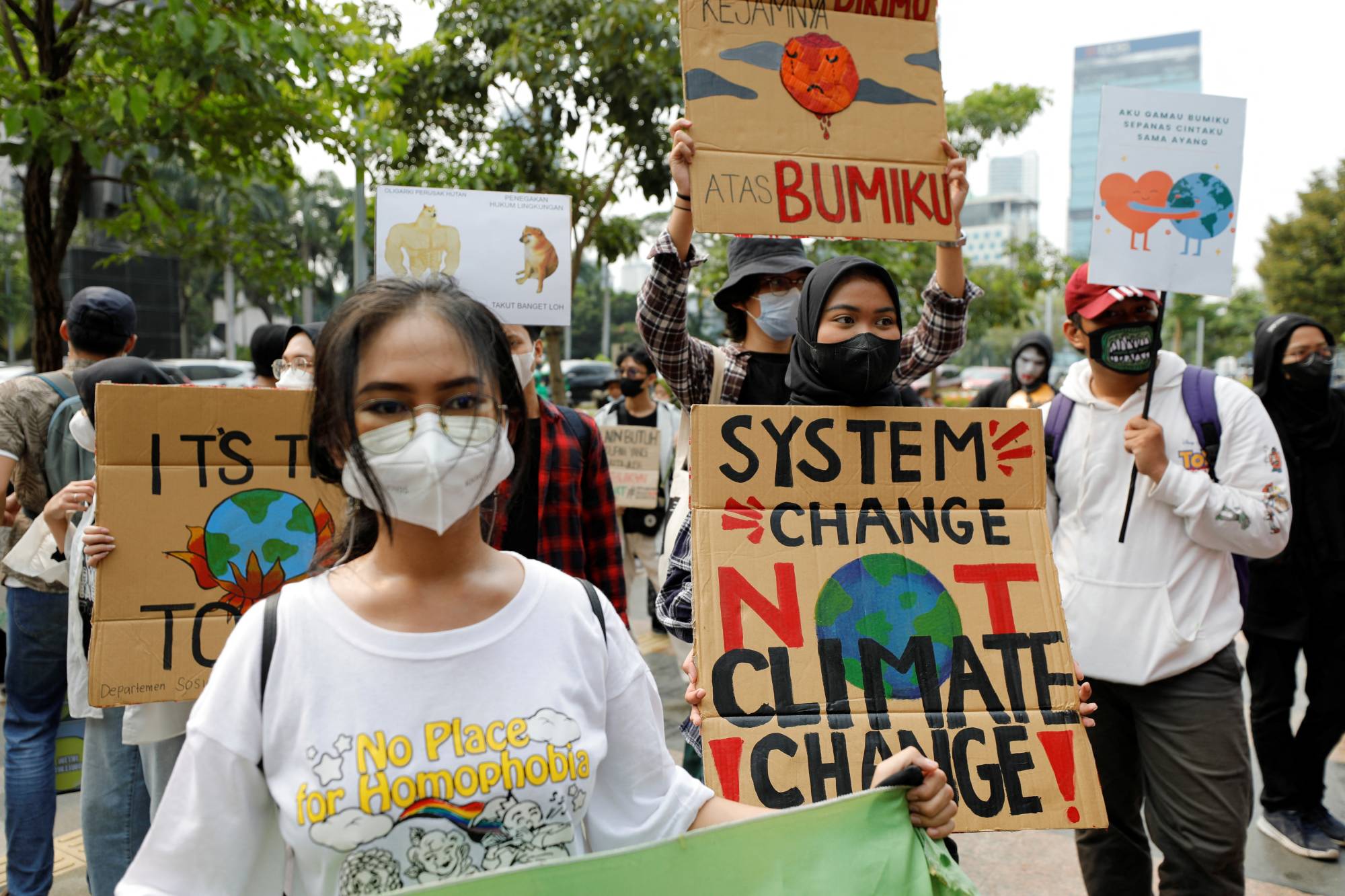 According to a 2022 Pew Research Center report, most U.S. adults — including a solid majority of Christians and large numbers of people who identify with other religious traditions — consider the Earth sacred and believe God gave humans a duty to care for it.
But the survey also found that the highly religious (those who say they pray each day, regularly attend religious services and consider religion very important in their lives) are far less likely than other U.S. adults to express concern about warming temperatures around the globe.
The fault lines between these seemingly juxtaposed stats help define a lot of the coverage around religion and climate change, including how — although skepticism about climate change persists — various faith communities are part of the global push for climate action. They advocate for policy change, fight for climate justice, establish creation care ministries, embrace solar energy, join advocacy coalitions and more.
In the lead-up to the election, reporters should take time to note the nuance when it comes to faith actors’ various approaches to, and opinions about, climate change. Journalists might also consider coverage on new forms of partnership between religious communities and secular civic actors, particularly at the local level. Such partnerships will take on increasing importance as frustrated faith actors seek new alliances in their efforts to adapt to climate change.
Related ReligionLink Content:
- Reporting on Religion & Climate Change
- Experts on religious responses to climate change
- Covering creation care in the age of Donald Trump
- Copenhagen, climate change and religious lobbying
Sources on faith and climate change
-
Amanda J. Baugh
Amanda J. Baugh is a professor and the associate chair of religious studies at California State University, Northridge, where she specializes in the study of climate change, the environment and American religion, with attention to questions of race, ethnicity and class. She is the author of God and the Green Divide: Religious Environmentalism in Black and White.
-
Evan Berry
Evan Berry is an associate professor of environmental humanities in the School of Historical, Philosophical and Religious Studies at Arizona State University. His research examines the way religious ideas and organizations are mobilized in response to climate change and other global environmental challenges. He wrote the book Devoted to Nature: The Religious Roots of American Environmentalism.
-
Dayenu
Dayenu is a multigenerational Jewish movement that aims to confront the climate crisis with spiritual audacity and bold political action.
-
Evangelical Environmental Network
The Evangelical Environmental Network is a Christian ministry dedicated to mobilizing people to care for God’s creation. The network provides resources for congregations and advocates for environmentally friendly policies.
-
Green Muslims
The organization Green Muslims seeks to inspire Muslims to educate themselves about the environment and be stewards of the Earth. It works with mosques and Muslim student associations across the U.S.
-
California Interfaith Power & Light
California Interfaith Power & Light, the originator of the Interfaith Power & Light movement that began in 2000, works to mobilize faith communities in response to global warming. The organization has affiliates in more than 40 states and is based in San Francisco. Susan Stephenson is executive director.
-
Julian Kunnie
Julian Kunnie is a religious studies professor at the University of Arizona. He launched the Nyakweri Ecological Restoration and Preservation Project, which looks at how climate change affects the Nyakweri forest. Kunnie teaches courses on Indigenous religions, globalization and the environment.
-
Bron Raymond Taylor
Bron Raymond Taylor is a religion professor at the University of Florida in Gainesville, where he helped to launch a graduate program in religion and nature. Taylor was also instrumental in the formation of the International Society for the Study of Religion, Nature and Culture and served as its first president from 2006-2009. He is considered a leading scholar on religion and nature, and his books include (as editor) the Encyclopedia of Religion and Nature and (as author) Dark Green Religion: Nature Spirituality and the Planetary Future.
7. Safety and crime

And yet, violent and property crime rates are at their lowest levels since at least 1993, data from the FBI shows.
The problem, it seems, is a matter of perception.
In their research on Muslim American perceptions of crime and public safety, the Public Religion Research Institute concluded, there is an “ongoing need for consideration of religious perceptions and perspectives (particularly those of religious minorities) as a part of the broader public reckoning on issues of race, crime, and policing in the United States.”
Studies have shown that Christians in particular believe there is a higher crime rate — 69% of all “practicing Christians” and 81% of evangelicals — and that religiosity is correlated with higher levels of “punitiveness,” the desire to see criminals punished for their crimes because of a perceived evil or moral failure, belief in rising crime rates or fear of violence.
Research has also revealed correlations between theological conservativism and handgun ownership, perhaps for personal protection in a perceived environment of increased crime — with evangelicals more likely to own handguns than mainline Protestants. At the same time, research has also been done that shows that Americans who attend religious services more frequently than others tend to be more supportive of stricter gun laws and that religion tends to have a deterring influence on crime-related attitudes and behaviors.
Groups such as the Center for American Progress say that, driven by both a sense of ethical obligation and concern for local safety, religious communities can play a significant role in efforts to reduce gun violence, including by advocating for common-sense gun reform.
Another aspect of this storyline to be explored is crimes against religious communities themselves.
According to FBI statistics, there were 2,042 reported incidents based on religion in 2022 — a marked increase from 2021 (1,590). “More than half of these (1,122),” the report says, “were driven by anti-Jewish bias.” There were also 158 incidents targeting Muslims and 181 targeting Sikhs, similar to numbers recorded in 2021. Religious communities have both been the target of, and at times have been part of perpetrating, attacks on religious persons and sacred sites. From hostage situations to graffiti and vandalism, toppled gravestones to active shooters or bombings, extreme acts against places of worship extends across faiths.
At the very least, the statistics point to the need for nuanced, careful reporting on religion, safety and crime — starting with perceptions, but also including how religious actors and communities are confronting, or perhaps contributing to, crime around the U.S.
Related ReligionLink Content:
Sources on religion, safety and crime
-
Center for American Progress
The Center for American Progress is a nonpartisan institute that promotes freedom and justice in a wide variety of issues. Daniella Gibbs Leger is the executive vice president of communications and strategy.
-
Shane Claiborne
Shane Claiborne is a Philadelphia-based Christian activist and author. He is a co-founder of Red Letter Christians, a Christian group that focuses on people at the economic and social margins.
-
Ethics & Religious Liberty Commission
The Southern Baptist Convention’s Ethics & Religious Liberty Commission is the public policy arm of the Southern Baptist Convention. Hannah Daniel is the commission’s director of public policy.
-
Lucy McBath
Rep. Lucy McBath, D-Ga., serves in the U.S. House of Representatives. She entered politics after her son, Jordan Davis, was shot and killed in 2012. Before her election to Congress, McBath led faith outreach for Everytown for Gun Safety and Moms Demand Action.
-
Barry Young
Barry Young is the vice president of operations for Strategos International, which provides safety training for businesses, schools, hospitals and churches. He previously served as director of security at two churches in Kansas City.
-
Irene Zempi
Irene Zempi is an associate professor in criminology at Nottingham Trent University. Zempi is also chair of the British Society of Criminology Hate Crime Network, the lead of the NTU Hate Crime Research Group. She has published multiple books on Islamophobia.
And what about democracy itself?

Experts, pollsters and pundits have voiced concerns that “Christian nationalism” threatens democracy.
In covering this potential threat, it is vital that reporters first get their definitions right. Amid a ballooning of the term’s usage, reporters have to be sure they are clear about what, and whom, they are talking about when they reference “Christian nationalism” and any potential threat it may embody. ReligionLink has a guide that can get you started.
Then, it is a matter of working the process described above: When reporting on threats to democracy and the religious actors involved thereof, be sure to separate political and religious descriptors, dive beneath the data and blanket descriptors, find out where values (and voters) are coming from and look for unlikely agreements and disagreements.
There also, of course, numerous faith groups rallying to promote and defend democracy — in the U.S. and beyond. Reporters need to not allow the focus on Christian nationalism, as warranted as it may be, to suck up all the air in the room. Be sure to not only find sources who speak against nationalistic attempts to undermine diverse democracies. Instead, focus on how certain religious actors are motivated by their faith to save and sustain democracy in the face of polarization and efforts to undermine it.
If reporters are to rise to this occasion, it will be done by doing what we do best — reporting with balance, accuracy and insight.
Related ReligionLink Content:
Sources on religion and democracy
-
Christians Against Christian Nationalism
Christians Against Christian Nationalism is a large group of faith leaders concerned that Christian nationalism presents a persistent threat to both religious communities and democracy. Amanda Tyler of the Baptist Joint Committee for Religious Liberty is lead organizer. The press contact is Karlee Marshall.
-
Angela Denker
Angela Denker, a veteran journalist and Lutheran pastor, is author of Red State Christians: A Journey Into White Christian Nationalism and the Wreckage It Leaves Behind.
-
Michelle Goldberg
Michelle Goldberg is an op-ed columnist for The New York Times. She is also the author of Kingdom Coming: The Rise of Christian Nationalism, which discusses “dominion theology,” which links Christianity and political governance.
-
Philip Gorski
Philip Gorski is professor of sociology at Yale University. He is a comparative-historical sociologist with work on topics such as state formation, nationalism, revolution, economic development and secularization and with particular attention given to the interaction of religion and politics. He co-runs the Religion and Politics Colloquium at the Yale MacMillan Center and is co-author (with Samuel L. Perry) of The Flag and the Cross: White Christian Nationalism and the Threat to American Democracy.
-
Bradley Onishi
Brad Onishi is a social commentator, scholar and co-host of the “Straight White American Jesus” podcast, which ranks in the top 50 of politics shows on Apple’s podcast charts. He is the author of Preparing for War: The Extremist History of White Christian Nationalism – And What Comes Next.