


Coverage of what has been called “Christian nationalism” has become ubiquitous. So ubiquitous, in fact, that some commentators in the United States have warned Christian nationalism is a democracy demolisher. Others, however, have raised concerns that coverage of Christian nationalism is “overhyped” and the concept poorly defined.
In this ReligionLink Reporting Guide, we take a deep dive into Christian nationalism — what it is, its historical background, where it is most prominent and how it is impacting politics and societies across the globe.
What is Christian nationalism?
Definitions of Christian nationalism — and its racialized or context-specific varieties — differ. But at the heart of Christian nationalism is a desire that a nation’s civic life be defined by Christianity, in its identification, history, symbols, values and public policies, and that the government take active steps to enforce this view and impose it on the populace.
Taking a broad approach to the phenomenon in the United States, sociologists Andrew Whitehead and Samuel L. Perry define Christian nationalism as “a cultural framework — a collection of myths, traditions, symbols, narratives, and value systems. This framework blurs distinctions between Christian identity and American identity, viewing the two as closely related and seeking to enhance and preserve their union.”
Similar definitions have been offered for other kinds of radical-right religious populism across the globe that largely rely on fear provoked by the shift from privilege to plurality and the present (or former) majority becoming a racial or cultural minority.
It is important in our reporting, writes reporter Bobby Ross Jr., to be as precise as possible with the term. Surveying a range of scholars and reporters, the Oklahoma-based journalist found varying definitions of Christian nationalism and ways people could be categorized as a Christian nationalist or not. In Perry and Whitehead’s research, for example, they used a 24-point scale to identify 32.1% of Americans as accommodators and 19.8% as ambassadors of Christian nationalism. All in all, that’s more than half of the U.S. population — results numerous scholars find questionable.
It is also important to be aware of how the term has become a kind of “culture-war acid test” since the Jan. 6, 2021, attack on the U.S. Capitol, according to Religion News Service’s Bob Smietana and Jack Jenkins. While the term draws ire on one side of the political divide, it attracts a heterogeneous mix of strange bedfellows claiming the moniker on the other — from Trump prophets and theocrats to QAnon conspiracy theorists and God-and-country conservatives.
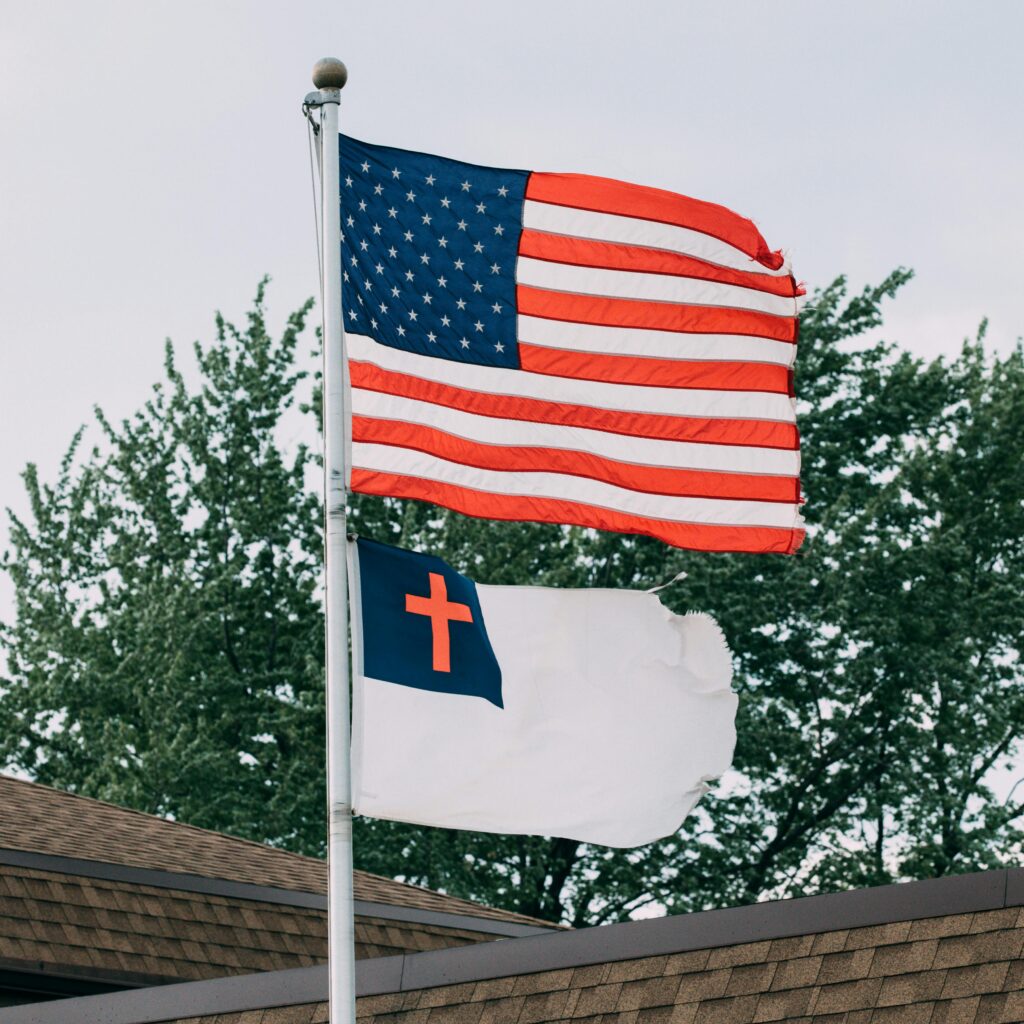
Among them are those who identify with, or support, the New Apostolic Reformation. An amorphous group of leadership networks formed by seminary professor C. Peter Wagner in the 1990s and early 2000s, the NAR is built around the idea that the church is engaged in spiritual warfare on earth, called to fight a cosmic battle between good and evil, and needs to be led by a renewed echelon of apostles and prophets who will lead Christians to transform the nations they live in.
Bradley Onishi, author and co-host of the podcast “Straight White American Jesus,” told PBS that the NAR in the U.S. is a “loosely organized but influential charismatic Christian movement,” made up of “Christians who want to revolutionize the way that our country looks, and to make it great again in terms of being a Christian nation.” Specifically, they envision a Christian society built on “seven mountains,” or spheres of influence: church, education, government and military, family, commerce, entertainment and media. The expressed goal of this “Seven Mountain Mandate” is the political and religious domination of, or dominion over, the world, country by country, through the implementation of their interpretation of the Bible’s moral laws and sanctions.
There are also prominent leaders such as Douglas Wilson, “a once-fringe Christian leader” who has made strides in “Trump’s Washington,” according to The Associated Press’s Tiffany Stanley. Doug Wilson pastors Christ Church in Moscow, Idaho, which is a member of the Communion of Reformed Evangelical Churches. The CREC is a network of churches that adheres to Reformed theology and other statements of faith, and Wilson and his church are associated with Christian Reconstructionism, a movement that advocates for Christian governance and dominion over society. He has openly embraced the idea of Christian nationalism.
But not everyone who may be a Christian nationalist in opinion or practice claims the name. Furthermore, some who could not justifiably be labeled “traditional Christians” have taken on the tag of “Christian nationalist” as a means of gaining influence and power.
That uncertainty is why some analysts and commentators, such as sociologist Philip Gorski or theologian Richard Mouw, want both Christians and those who cover them to delineate between “Christian nationalism” and being a “patriotic Christian.” The latter, writes Gorski, features “an adherence to the ideals of the United States [while] nationalism is loyalty to your tribe and not the country.” Shifting away from more traditional forms of political activism on the religious right, Christian nationalists assert instead that a nation cannot be evangelized into transformation, but that Christians — or those who align with their political values and views — need to be in power.
Despite the debates around terminology, most Americans remain unfamiliar with the term, and their views of what it means to be a Christian nation are wide-ranging and often ambiguous. Among those who know the term, more people express an unfavorable view of Christian nationalism than those who hold it in high regard, according to Pew Research Center. Furthermore, views of Christian nationalism in the U.S. imply assorted levels of Christian influence on the nation, ranging from strict theocratic rule to merely embracing certain moral values as a means to helping others.
History/background
Christian nationalism in the U.S. did not start on Jan. 6, 2021. Nor did it emerge with the religious right in the 1970s and ’80s. And even if the term only entered the popular American imagination over the last decade, it has deep historical roots in the country’s founding and development, “snaking its way through society,” with proponents promoting the idea that the nation has a special relationship with Christianity and that its laws should reflect Christian values.
In the Colonial era, many early settlers came to the Americas to establish a Christian society based on their particular interpretations of the Bible. They imagined Colonial America as a shining “city on a hill,” suggesting a special role and exceptional place for the emerging United States as a place of divine providence and power.
Figures such as John Winthrop — believed to have popularized the “city upon a hill” metaphor — used religious language to describe the new settlements, with some going so far as to establish mini-theocracies in the Colonies.
The charter that established Virginia in 1609 declared that one of the colony’s purposes was to convert the “people in those Parts unto the true Worship of God and Christian Religion.” To that end, early colonists advocated religious tests and requirements to hold public office or vote and committed egregious abuses in the name of evangelizing the Indigenous peoples of the Americas.
Elsewhere, popular Puritan preacher John Cotton advocated for theocratic rule in places such as Massachusetts, Connecticut and New Hampshire, calling it the “best forme (sic) of government in the commonwealth,” and defined religious liberty as freedom from other forms of “deviant” Christianity.
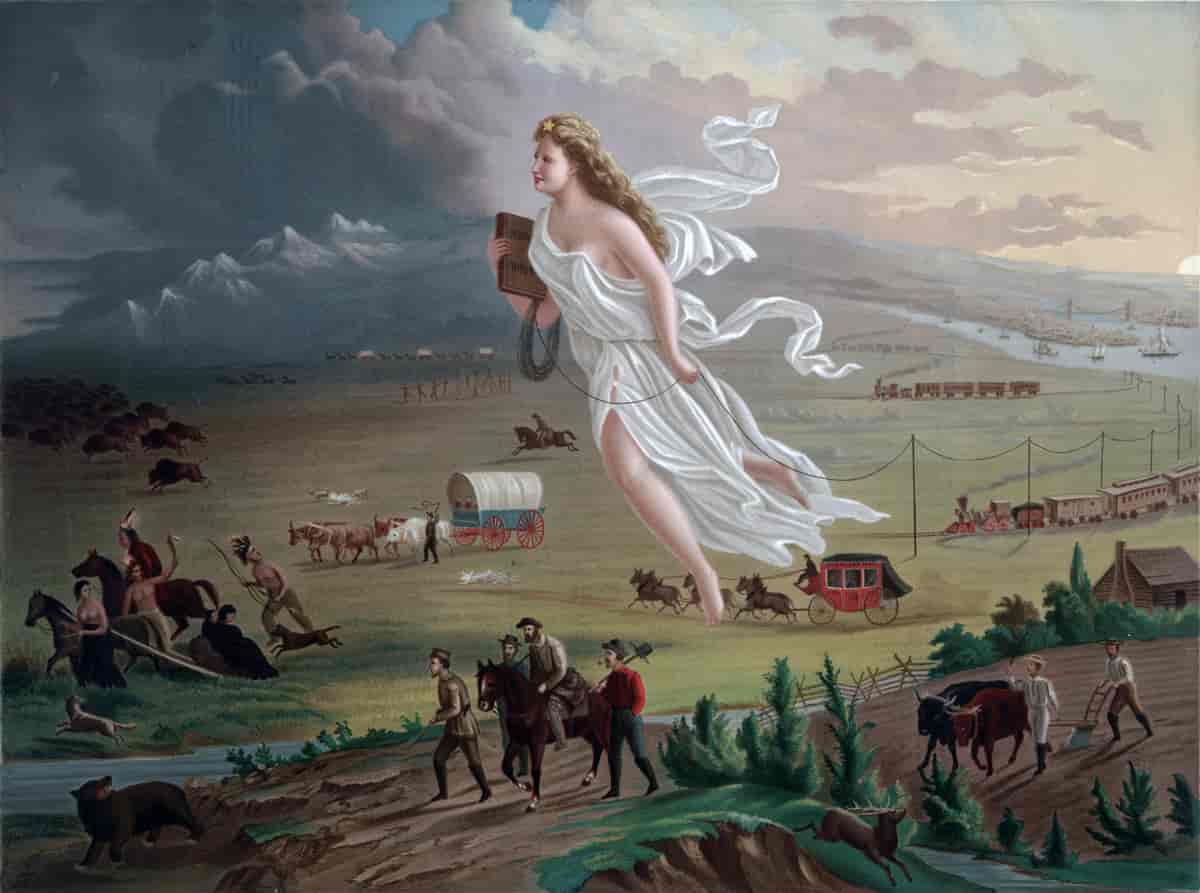
Key to this process were two concepts that undergirded the assertion that European Christian civilization was superior and, thus, that the colonization, subjugation and conversion of non-European peoples from the 15th through the 19th centuries was justified.
First, the Doctrine of Discovery was a legal doctrine and ideology drawn from three papal bulls that granted Christian European monarchies the right to seize lands they “discovered,” even if those lands were already inhabited, and to conquer existing populations. Second, Manifest Destiny was a belief that undergirded America’s rapid westward expansion. Its proponents used religious arguments to justify their march across North America and the displacement of Indigenous populations along the way, viewing this expansion as a divinely favored mission to spread democracy, capitalism and Christianity.
Later, in the 20th century, figures such as diplomat John Foster Dulles framed the Cold War as a conflict between a Christian America and a godless Soviet Union, emphasizing America’s role as a champion of civilization and freedom. But before Dulles — and others — popularized such views, the political organizer Gerald Lyman Kenneth Smith founded the Christian Nationalist Crusade, the Christian Nationalist Party, the America First Party and a monthly publication called The Cross and the Flag in the 1940s. According to historian Seth Cotlar, undergirding Smith’s anti-communist, antisemitic and xenophobic views was “the idea that America belongs to Christian people, to white Christian people, and that others are maybe to be tolerated as kind of guests, as visitors, as second class Americans.”
Later, in the 1970s and ’80s, the Christian right further fueled Christian nationalist sentiments with a focus on issues such as abortion, gay rights, secularism and the role of religion in public life. While the two ideologies are distinct, they are closely linked and often overlap. For example, some within the Christian right actively promote Christian nationalist ideals. Televangelist and former presidential candidate Pat Robertson, who died at the age of 93 in 2023, “imagined a nation where conservative Christian values reigned in the halls of power,” according to The New York Times.
Today, Christian nationalism is characterized by the belief that the U.S. should be explicitly defined as a Christian nation, with its laws and policies reflecting Christian values. Advocates for Christian nationalism often call for more prayer in schools, the display of the Ten Commandments in public spaces and restrictions on abortion and same-sex marriage.
There is a growing concern that Christian nationalism poses a threat to religious freedom and democratic principles, as it can lead to the exclusion and marginalization of those who do not share its views. For example, Project Blitz is a coalition that actively lobbies for laws promoting Bible classes in public schools, religious exemptions from health care and LGBTQ rights and increased Christian presence in public institutions. Critics argue this blurs the line between church and state and marginalizes non-Christians.
In February 2025, President Donald Trump issued an executive order establishing a task force on “anti-Christian bias” in federal agencies. It included creating a White House faith office and brought attention to how prioritizing evangelical Christianity in federal policy can undermine religious freedoms for minorities
And beyond Jan. 6, a 2022 Buffalo mass shooting in a predominantly Black neighborhood was perpetrated by a man citing “Christian values” and with a manifesto intertwining Christian nationalist ideas with white supremacy.
Below are more resources to help you report on and understand Christian nationalism, as well as its predecessors, multiple expressions and development across U.S. history.
Books:
- White Evangelical Racism: The Politics of Morality in America, by Anthea Butler
- The Psychology of Christian Nationalism: Why People Are Drawn In and How to Talk Across the Divide, by Pamela Cooper-White
- Faith and Resistance in the Age of Trump, edited by Miguel A. De La Torre
- Disciples of White Jesus: The Radicalization of American Boyhood, by Angela Denker
- Believe Me: The Evangelical Road to Donald Trump, by Jon Fea
- Inventing a Christian America: The Myth of the Religious Founding, by Steven K. Green
- Strangers in Their Own Land: Anger and Mourning on the American Right, by Arlie Russell Hochschild
- White Too Long: The Legacy of White Supremacy in American Christianity, by Robert P. Jones
- Unholy: How White Christian Nationalists Powered the Trump Presidency, and the Devastating Legacy They Left Behind, by Sarah Posner
- Doing Theology in the Age of Trump: A Critical Report on Christian Nationalism, edited by Jeffrey W. Robbins and Clayton Crockett
- American Crusade: How the Supreme Court is Weaponizing Religious Freedom, by Andrew L. Seidel
- The Power Worshippers: Inside the Dangerous Rise of Religious Nationalism, by Katherine Stewart
- Testimony: Inside the Evangelical Movement That Failed a Generation, by Jon Ward
- American Idolatry: How Christian Nationalism Betrays the Gospel and Threatens the Church, by Andrew L. Whitehead
- Taking America Back for God: Christian Nationalism in the United States, by Andrew L. Whitehead and Samuel L. Perry
- Mere Christendom, by Doug Wilson
- Righting the American Dream: How the Media Mainstreamed Reagan’s Evangelical Vision, by Diane Winston
- The Case for Christian Nationalism, by Stephen Wolfe
- Blood and Politics: The History of the White Nationalist Movement From the Margins to the Mainstream, by Leonard Zeskind
Orientations and overviews:
- “Americans should stop using the term Christian Nationalism,” by Heath W. Carter
- “Christianity and Foreign Policy,” by Mark R. Amstutz
- “What Does ‘White Christian Nationalism’ Even Mean, Anyway?” by Mitchell Atencio
- “What is Christian nationalism?” by the Baptist Joint Committee for Religious Liberty
- “White Christian Nationalism: The Deep Story Behind the Capitol Insurrection,” by Philip Gorski
- “A Concise Introduction to Christian Nationalism,” by Interfaith Alliance
- “Crisis of faith: Christian nationalism and the threat to U.S. democracy,” by Edward Lempinen
- “Religious Nationalism in Brazil,” by Carly Machado
- “Talk of ‘Christian nationalism’ is getting a lot louder — but what does the term really mean?” by Eric McDaniel
- “What Is Christian Nationalism?” by Paul D. Miller
- “A History of Christian Nationalism,” from NPR
- “Culture Wars and COVID-19 Conduct: Christian Nationalism, Religiosity, and Americans’ Behavior During the Coronavirus Pandemic,” by Samuel L. Perry, Andrew L. Whitehead and Joshua B. Grubbs
- “Is Christian nationalism growing or declining? Both,” by Samuel L. Perry and Andrew L. Whitehead
- “In their own words: How Americans describe ‘Christian nationalism,’” by Pew Research Center
- “Christian Nationalisms and Building New Social Realities,” by Sarah Riccardi-Swartz
- “Understanding White Christian Nationalism,” from Yale University’s Institution for Social and Policy Studies
Digital resources:
- “Christian Nationalism Across All 50 States: Insights from PRRI’s 2024 American Values Atlas.” PRRI interviewed more than 22,000 adults as part of the PRRI American Values Atlas to continue monitoring the spread of support for Christian nationalism and the factors driving such views.
- “Religion and Cross-cultural Christian Nationalism,” a podcasted panel discussion between experts examining Christian nationalism in the United States and Brazil
- “Uncivil Religion,” a collaborative digital project between the department of religious studies at the University of Alabama and the Smithsonian’s National Museum of American History
- “Charismatic Revival Fury: The New Apostolic Reformation,” an audio-documentary series on the Christian leaders and ideas that fueled the Capitol riot, written by Matthew D. Taylor, produced by Bradley Onishi and engineered by Scott Okamoto
- “Christian Nationalism,” an online set of resources from the Baptist Joint Committee
- “Resources for Racial Justice: Christian Nationalism and Race,” from the Yale University Library
- “Christian Nationalism: Responses and Resources,” an online guide and set of resources for further learning produced by the Institute for Islamic, Christian and Jewish Studies
[Example Story] How big Christian nationalism has come courting in North Idaho
Jack Jenkins, Religion News Service
Feb. 22, 2023

(RNS) — Earlier this month, Rep. Marjorie Taylor Greene, the Georgia Republican, addressed the Kootenai County Republican Central Committee, whose purview runs from this small resort city up along the Washington state border. Before she spoke, a local pastor and onetime Idaho state representative named Tim Remington, wearing an American flag-themed tie, revved up the crowd: “If we put God back in Idaho, then God will always protect Idaho.”
Greene’s remarks lasted nearly an hour, touching on a range of topics dear to her far-right fans: claims about the 2020 election being “stolen,” sympathy for those arrested for taking part in attacking the U.S. Capitol and her opposition to vaccine mandates.
She then insisted that Democrats in Washington have abandoned God and truth — specifically, the “sword” of biblical truth, which she said “will hurt you.”
The room of partisans applauded throughout, sometimes shouting “Amen!”
How to report on Christian nationalism
- As with all “faith and politics” reporting, be sure to complicate the narrative. To do so, try separating political and religious descriptors (e.g., “conservative Christian”); tell personal stories beyond the data and demographics and big headlines; ask people where their values come from — and why they feel the way they feel; and finally, look for unlikely agreements and disagreements.
- Take your coverage of Christian nationalism global, by linking currents in politics across the world. Religious nationalism, let alone “Christian nationalism,” is not confined to the U.S. Consider situating Christian nationalism within broader streams of religious nationalism — from the Hindutva politics of India and its diaspora to Buddhist nationalism in Myanmar, militant Zionism in Israel or Islamist movements in Turkey, Pakistan or the Palestinian territories.
- At the same time, it is important to localize your Christian nationalism story. How is the movement impacting your city? Your community library? The churches in your neighborhood?
- When interviewing Christian nationalists, be aware that you are doing more than gathering information; it also requires balancing journalistic integrity, ethics and safety, while avoiding inadvertently amplifying harmful rhetoric. While interviewing Christian nationalists offers insight into a powerful movement shaping U.S. politics, it poses risks of platforming extremism, as well as inadvertently sharing misinformation and exclusionary rhetoric. Journalists must balance truth-seeking with harm reduction—fact-checking claims, providing context, ensuring transparency and prioritizing safety—while resisting false equivalence and amplifying diverse voices affected by Christian nationalist policies.
- Likewise, though it is important to pay attention to big “culture war” issues such as abortion and LGBTQ+ rights, Christian nationalism plays a major role in how people understand other topics, including immigration, education, health care, the economy, foreign policy, etc.
- Reporting on Christian nationalism in a nuanced and textured way may require novel approaches such as ethnographic or gonzo journalism, asking newswriters and readers to step out of their comfort zones and to gain access to different communities and discourses through creative means. This may mean, as with the example below, embedding yourself within a community or spending a significant amount of time participating with and observing a group associated with Christian nationalism or espousing its views.
- Terminology, as you can see, is complicated. Be sure to ask sources how they understand and apply the term and consider including your own definition, even if you think your readers already understand.
[Example Story] ‘I think all the Christians get slaughtered’: Inside the MAGA road show barnstorming America
Sam Kestenbaum, Rolling Stone
Sept. 17, 2022

The cast assembles on the megachurch stage, each taking their turn in a pool of light.
There are doomsaying prophets with curved shofars, aspiring politicians lamenting election fraud, and naturopathic physicians warning of demonic invasion. Mike Lindell steps forward and says evil forces are undoing the nation. Roger Stone gives an apocalyptic homily. Michael Flynn lobs T-shirts into the pews. Scott McKay, alias Patriot Streetfighter, gyrates to the sounds of AC/DC while chopping a tomahawk in the air. In time, the Trump brothers appear and Eric puts his dad on speaker phone.
Praise music floats in the air and the crowd rocks back and forth. At one moment, a woman drops to the floor — “Hallelujah, hallelujah” — and speaks in tongues.
Standing at stage-right, surveying the festivities this July night in Virginia Beach, is a tall, bespectacled 41-year-old man named Clay Clark. With cropped blond hair and a toothy grin, he steps up to the lectern between each act, standing near a variety show gong. “Alright, ladies and gentlemen, how many of you believe Jesus is king? How many of you believe that Donald J. Trump is their president?” Whoops from the pews. “How many of you believe that Michael Flynn is America’s general?” More applause. “And how many of you believe in the power of prayer?”
Christian nationalism worldwide
How Christian nationalism has gone global
According to Nilay Saiya, assistant professor of public policy and global affairs at Nanyang Technological University, Singapore, “Christian nationalism is a political ideology that advocates for the fusion of a particular form of Christianity and a country’s civic and political life, and for a privileged place for Christianity in the public realm.” This ideology is not linked to any one nation but has been surging in different forms across the globe.
While U.S. media have largely focused on Christian nationalism at home, especially given the visible presence of Christian nationalism during the 2021 Capitol insurrection, Christian nationalism is a global issue, argues Saiya in his book The Global Politics of Jesus: A Christian Case for Church-State Separation.
For example, evangelical support for Viktor Orbán’s nationalist policies in Hungary and Fratelli d’Italia (Brothers of Italy) leader Giorgia Meloni’s promise to “defend God, country and family” en route to becoming Italy’s first female prime minister illustrate how Christian nationalism has grown as part of the political far right in Europe. This also includes its influence in Russian President Vladimir Putin’s war in Ukraine.
Meanwhile, in Brazil, Jair Bolsonaro’s political rise and the country’s post-election turmoil in 2023 shared “religious roots” with its twin insurrection in the States, according to scholars Raimundo Barreto and João B. Chaves.
Back in 2019, some wondered whether an attack on a mosque in New Zealand could be termed “Christian nationalism” or not.
Camila Vergara, writing for Politico, said these far-right populists “are selling popular empowerment based on the discrimination and oppression of ‘the other’: immigrants, gender dissidents, feminists, religious minorities, left-wing ‘radicals,’ the indigenous and the poor” to an increasing number of voters attracted by the politicians’ Christian nationalist overtones.
For reporters, it is important to keep in view both the global nature of Christian nationalism and the networks that connect seemingly disparate movements in various localities across the world.
North America
While Christian nationalism is more commonly associated with the U.S., there are some instances of Christian nationalist sentiment and movements in Canada, Mexico and elsewhere in North America, particularly related to historical conflicts and the influence of specific religious groups.
During the “freedom convoy” protests and blockades that gripped Canada in early 2022, commentators noted the presence of Bible verses and religious motivations for some of the protesters’ presence and activism.
Biblical scholar Christine Mitchell from the University of Saskatchewan wrote about white Christian nationalists, who:
are people who combine American-style white evangelicalism with Canadian nationalism to declare themselves as the only authentic Canadians.
Others have noted the religio-political ideology of Canada’s Christian Heritage Party, which was founded on an anti-abortion platform. The party has explicitly stated that, if it forms a government, it hopes to “apply proven Judeo-Christian principles of justice and compassion to Canada’s contemporary public policy needs.”
Anglican, Lutheran, Presbyterian and other Christian institutions and organizations have denounced Christian nationalism, both in Canada and among its neighbors to the south.
Meanwhile, in Mexico, although there are instances of Christian nationalist sentiment, it is not a dominant force in the same way as in the U.S.
Still, it is important to note the expansion of organizations such as the U.S.-based Conservative Political Action Conference, which held its first forum in Mexico in 2022 as part of its efforts to craft a more transnational movement, and the increasing potency of Christian nationalist sentiment among Latino (also referred to as “Hispanic”) Protestants in the U.S.
A 2025 study from the Public Religion Research Institute shows that while support for Christian nationalism in the U.S. remained relatively steady between 2022 and 2024, there was a marked increase in support among Hispanic Protestants. Notably, a majority of Hispanic Protestants (55%) supported the statement that “the U.S. government should declare America a Christian nation.”
Though the numbers are notable, PRRI researcher Anita Huízar-Hernández noted that differences based on racial (e.g., identifying as “white” or “nonwhite”) and religious (whether one was evangelical or Catholic) characteristics impacted those statistics and pointed out that to truly understand Hispanic American voting, reporters and analysts “need to go beyond one-dimensional racial and religious subcategories to instead consider how the interplay among the many different identities that Hispanic Americans inhabit intersect with and inform one another.”
And while Christian nationalism in Central America is a complex religio-political phenomenon in its own right, it is interesting to note how Christian nationalists in the U.S. have increasingly embraced strongman leaders such as Nayib Bukele. With Palestinian Christian heritage, a father who converted to Islam and founded El Salvador’s first mosque and a wife with “Jewish roots,” Bukele himself is ambiguous about his religious identification, preferring instead to profess a general belief in “God and Jesus.”
Nonetheless, and not unlike other, increasingly authoritarian leaders embraced by the Christian right, Bukele has surged in popularity and was welcomed — alongside Argentine President Javier Milei — like a celebrity at the 2024 Conservative Political Action Conference in Delaware. And Seven Mountain Mandate proponent Lance Wallnau praised Bukele’s “unconventional leadership” and “breakthrough strategies,” specifically his crackdown on El Salvador’s gangs.
Europe
Katherine Stewart, a U.S.-based reporter, believes a form of hyperpatriarchal, homophobic and nationalistic Christianity often associated with evangelicals in America is gaining a beachhead in the United Kingdom and wider Europe. The developments there, she writes, “are like a window on the American past. This is how things must have looked before the antidemocratic reaction really took hold,” she wrote.
Along with Stewart, other analysts and observers are warning that while electorally weak, the Christian right in Europe is gaining ground in the courts and making inroads across the continent.
While reporters need to take notice, it is also vitally important that the careful observer of religion recognize some of the complexities that have shaped the Christian right’s contours in ways distinct from, if related to, the forms we see taking hold in the U.S.
Europe’s Christian right, which is perhaps best defined by its ideas rather than institutions, is a nebulous network without a specified structure that spans denominations and nations across the continent. Regardless of national context, personal history or denomination, remarkably similar narratives are being promoted by preachers, pastors and activists both in churches and online.
What is shared between these disparate groups and factions are warnings about the dangers of Islamism and refugees, perceived threats to Christians and the West from the LGBTQ+ community, the rejection of abortion, the preference for a patriarchal family model and a commitment to Christianity playing a special role in national culture and politics.
Undergirding these ideas is a core fear of secularization and a desire to re-Christianize the continent.
Though processes of secularization are well underway in North America, its effects are already more pervasive and profound in Europe. For those on the Christian right, the decline of Christianity has left society susceptible to what they see as moral decay, increasing uncertainty about security and the future, rising antisocial behavior and threats to their understanding of free speech and the freedom of religion.
To that end, they have organized around certain legislative measures and legal challenges to defend what they see as their right to free speech, especially around issues of sexuality. High-profile cases like that of Finnish politician Päivi Räsänen and Bishop Juhana Pohjola or German pastor Olaf Latzel have drawn attention to how the Christian right sees an opportunity amid the paperwork of legal challenges.
For example, the U.S.-based Alliance Defending Freedom opened an international branch in Vienna, from where it is involved in litigation before the European Court of Human Rights in Strasbourg. Also in Strasbourg are the offices of the European Centre for Law and Justice, which is essentially the European arm of the American Center for Law and Justice and which brings its politically conservative, Christian-based legal interpretations to the Council of Europe and European Commission.
According to the authors of The Christian Right in Europe: Movements, Networks, and Denominations, there are “numerous examples of European organizations with ties to or roots in the American Christian Right.” A prominent case discussed in the book is the World Congress of Families, which is an international conference that promotes Christian right values internationally — including opposition to divorce, birth control, same-sex marriage and abortion.
“[A]cross Europe,” the authors write, “there is a relatively coherent Christian-Right blueprint: the stress on rights, the organizational form of grassroots NGOs, the use of lobbying and strategic litigation … and the targeting of international organizations and high-level court cases.”
Multiple examples point to the consistent closeness of the Christian right to certain European political parties.
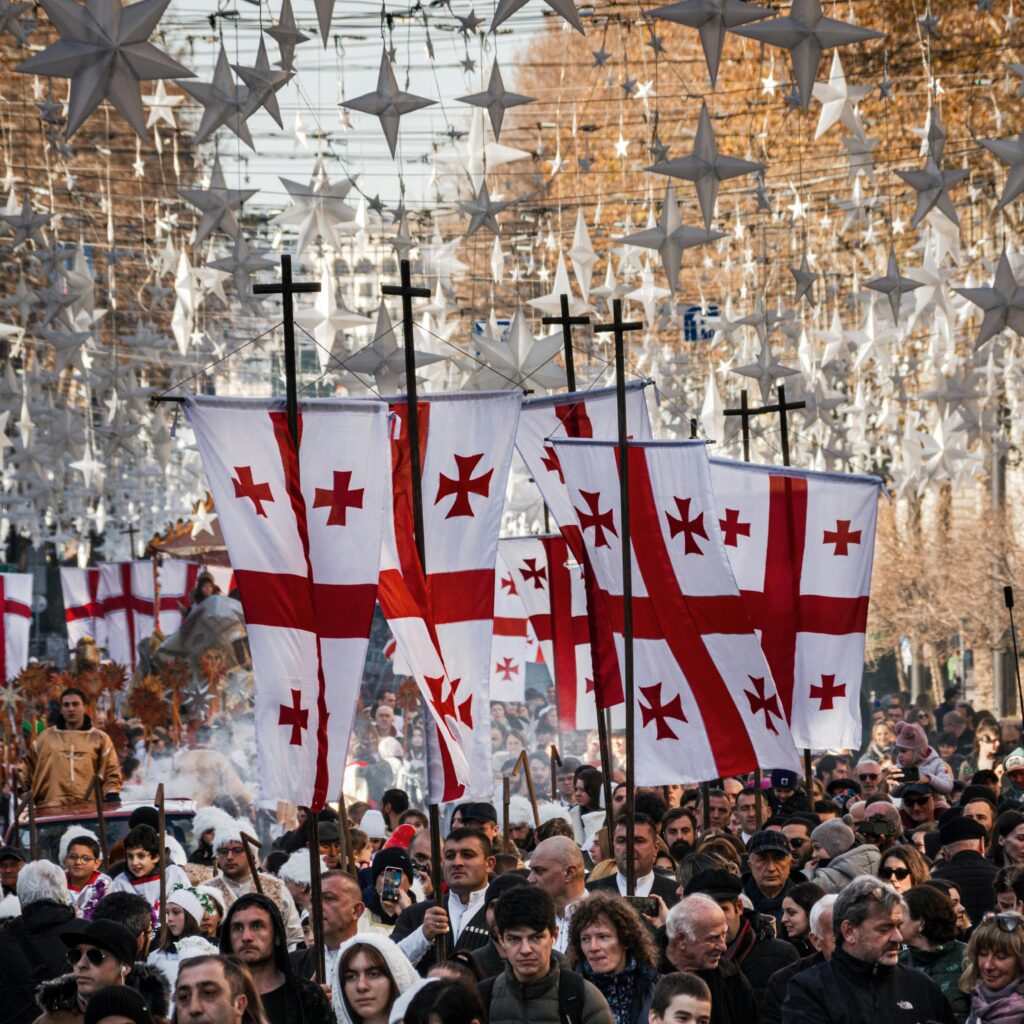
Secular, or nominally Christian, parties have significantly influenced political institutions across the continent and have been able to seed their ideology into the mainstream, attracting broad support among a variety of constituencies frustrated with the status quo.
Capitalizing on the crumbling of the Christian consensus in Europe, some of these parties have strategically adopted and adapted Christian symbols and language to do so. Playing on fears of secularization and immigration, as well as the moral decay that the Christian right feels has taken hold, these parties portray a Christian Europe under threat from both moral liberalization and Islam.
Perhaps more than other countries, Poland exemplifies some of these trends with the rise of the Law and Justice Party (Prawo i Sprawiedliwość, or PiS), which was in power from 2015 to 2023. PiS “maintained close ties with conservative Catholic groups, seeking to restrict abortion and opposing LGBTQ+ rights, particularly with the Institute for Legal Culture Ordo Iuris, an ultra-conservative think tank established in 2013,” wrote Gionathan Lo Mascolo and Kristina Stoeckl for Canopy Forum.
But those trends can also be seen in Hungary, Slovakia or even Spain, where an evangelical party — Fiel — emerged ahead of the European Union elections in June 2024 with the motto “united in values, guided by faith.” The party’s president, Salvador Martí, appealed to supporters with a particular plea to help him get the continent’s first-ever evangelical representative elected to the European Parliament in Brussels.
Despite these trends and the rumors of the Christian right’s rapid rise in Europe, the situation is both distinct from, and not nearly as large as, that of the Christian right in places such as the U.S. or Brazil.
First, the Christian right has a more complex set of priorities in Europe and isn’t simply a carbon copy of its American counterparts. Though the North American and European varieties of Christian nationalism form a palimpsest of religio-racial grasping at power, they are not the same — with European movements expressing opinions, or adopting practices, that do not match the tenor of the Christian right in the U.S.
For example, European Christians, of all stripes and backgrounds, have been generally welcoming to migrants even as they express anti-Muslim sentiment. Though they may emphasize evangelism, their welcoming posture to newcomers from Africa, Asia and the Middle East has been genuine — and mutually transformative. Not only have large numbers of migrants and asylum-seekers joined churches and/or converted to Christianity, but the churches themselves have taken on the character, and leadership, of the newcomers.
Since the unprecedented migratory movements that shook Europe in 2015 and 2016, an increasing number of Christian organizations have had to reshape their institutions and rethink the identity of Christianity from below — with studies finding that asylum-seekers, economic migrants and internally displaced persons can make up to half of local church communities.
Similar notes could be made regarding European evangelicals’ commitment to the environment and addressing the crisis of climate change. Otherwise conservative congregations and church groups have hired creation care coordinators, organized climate actions or planted pocket gardens in efforts to “go green.”
Second, for a sense of continuity, it is important to remember Europe’s long relationship with various forms of what we might call “Christian nationalism.” Though that terminology carries a certain connotation and reverberates with a particular resonance in this present political moment, it is important to remember that in the past — and the present — Christian nationalism has, for lack of a better phrasing, been the name of the game in Europe. Multiple countries still have formal state-church relationships, and Christianity enjoys a banal privilege in politics and society in numerous nations.
But in terms of rupture, it is important to note the intensive transnational interactions between European organizations and international social movements — in the U.S. and beyond — are adapting their shared ideology to the historical, political and cultural realities of Europe. That is relatively new and notable.
Third, for all the above, the Christian right in Europe is not nearly as big as one might think and nowhere near as powerful or influential as its U.S. counterpart. Though its supporters may influence public policy through strategic partnerships — or through the exploitation of its symbols and concerns by shrewd political parties — the movement remains marginal.
As noted by the authors of the aforementioned book The Christian Right in Europe, thanks to their outsized presence in social media, whether as the unintentional consequence of their desire to be visible, and vocal, online or through intentionally “fake organizational activity,” they have fostered “the false impression of a spontaneous grassroots movement.”
The end effect, the authors wrote, is that while Christian right groups are “by and large, minorities in their respective national contexts,” their specter may loom larger than any lived realities on the ground.
[Example story] America’s Christian Right Is Coming to the U.K.
Katherine Stewart, The New Republic
March 13, 2025
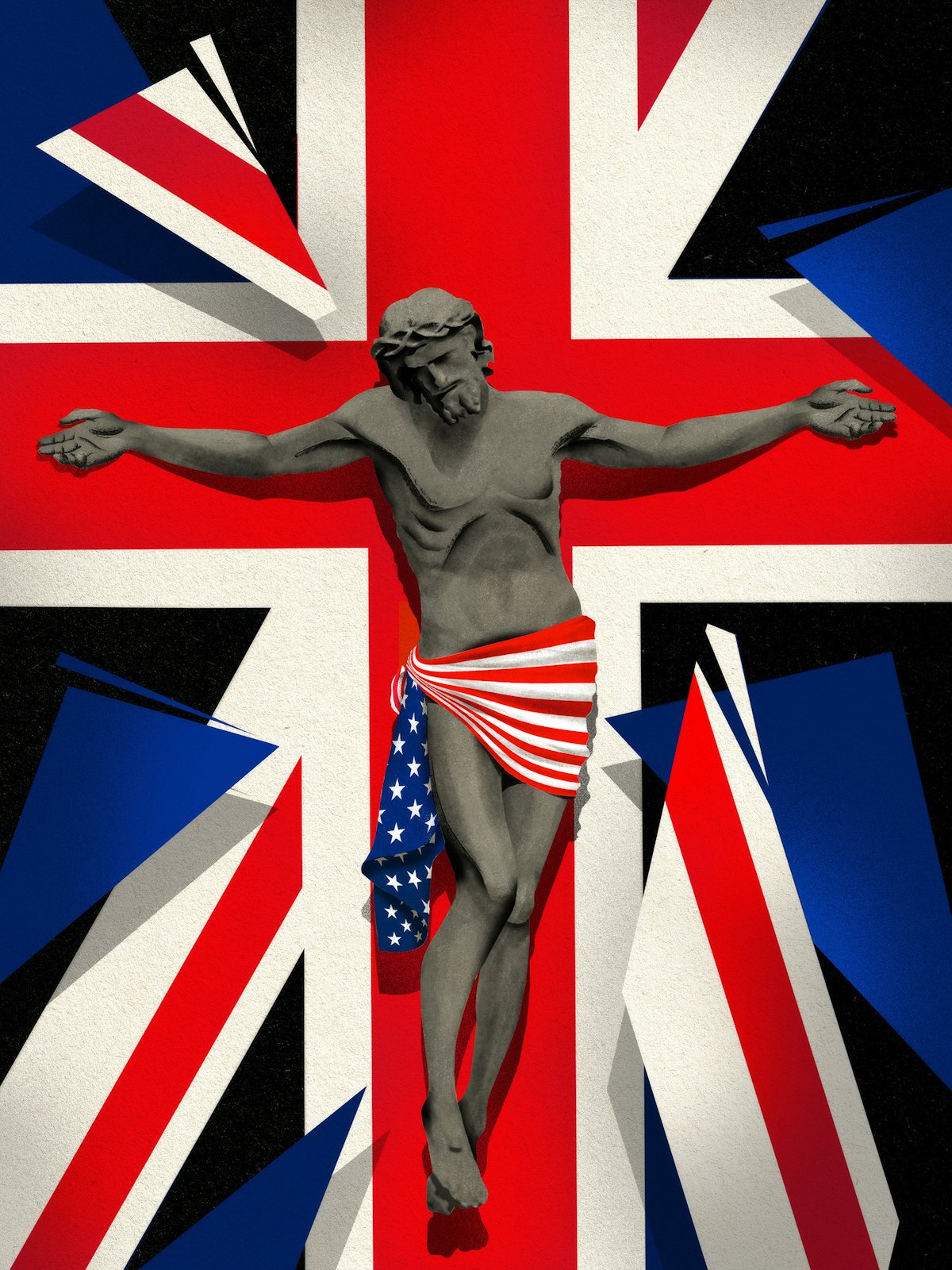
The red-white-and-blue world of Christian nationalism is a fascinating place, but it can also get claustrophobic. After a dozen years of reporting on the subject, I began to feel restless and perhaps at times a little unsafe. When I relocated, temporarily and for family reasons, from the United States to the U.K. in 2021, I therefore welcomed the distance. Though I planned to continue my reporting with regular return trips and a seemingly permanent virtual presence, I felt lighter and more carefree. London was my escape.
We found lodgings through an old friend in the Clerkenwell neighborhood, a jumble of Georgian row houses and converted warehouses that, almost two centuries ago, provided the setting for Charles Dickens’s novels Oliver Twist and Great Expectations and that now serves as a hub for media, design, and technology firms. It felt as far from MAGA-land as seemed decent to imagine. In those first days after the move, I set off on late-summer morning walks past eclectic restaurants and pub staff sweeping out the remains of the previous evening. I was elated. Here was a faraway perch from which to gain some perspective on the madness back in the homeland.
On a Sunday morning shortly after moving in, I step outside our new apartment for another exploratory ramble, and I hear singing. Humming along to a familiar-sounding tune, I discover a church at the other end of our very short block. The Clerkenwell Medical Mission is an elegant, square-shaped Victorian structure, and as the plaque outside explains, it was built to evangelize the disabled. A newer banner overhead announces the current incarnation of the building as GraceLife London.
The tune that I’m humming, I belatedly realize, is “Great Is Thy Faithfulness,” a twentieth-century worship classic at America’s evangelical and nondenominational churches. One artist who popularized it, Chris Rice, was something of a celebrity until 2020, when a church in Lexington, Kentucky, launched an investigation following accusations from a former student that Rice had sexually assaulted him on multiple occasions at youth retreats. (The church’s pastor issued a public statement deeming the allegations “credible because of the source of the allegations and corroborating evidence we have discovered.”) No matter, I think; the church on my street can’t be blamed for Rice’s misdeeds, and likely they don’t even know about it. I decide to take a look.
Latin America
In Latin America, a significant portion of evangelical Protestants, especially those who identify as “born again,” are embracing Christian nationalist ideas.
Historically, evangelical Christianity played a limited role in Latin American politics. However, as their numbers swell, some political leaders, such as former Brazilian President Jair Bolsonaro, have publicly associated with evangelical leaders, sometimes framing their governance as guided by divine will and promoting policies aligned with their views. To that end, evangelicals have been increasingly able to influence government policy on social issues such as abortion, LGBTQ+ rights and immigration.
Key players include large churches such as the Universal Church of the Kingdom of God, political fronts and parties such as Bolsonaro’s Liberal Party (PL) or Mexico’s Social Encounter Party (PES), impacting elections in their respective countries and pushing for “Christian national” ideals.
Some scholars suggest that Christian nationalism can be linked to authoritarian tendencies or the undermining of democratic institutions, as it may prioritize religious authority over democratic principles and institutions. Secularists believe it would be a step back for Latin American nations that have long fought for a separation of church and state after the end of Spanish colonial rule. Others fear that Christian nationalist policies could lead to restrictions on religious freedom, freedom of expression and other fundamental rights.
[Example Story] A ‘weird mirror that is Brazil': New film examines link between evangelicalism, far-right political power
Helen Teixera, Religion News Service
July 15, 2025
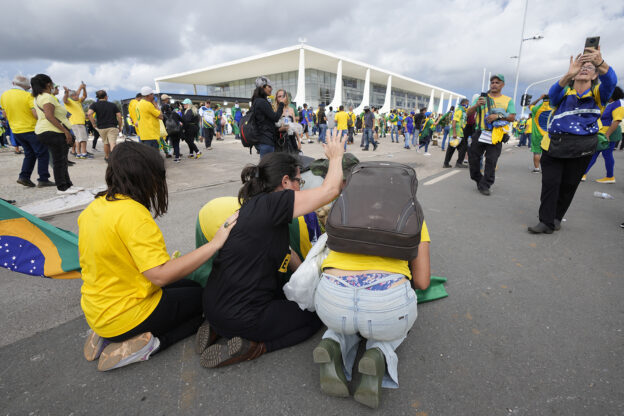
(RNS) — Protesters were dressed in national colors, holding Bibles and signs with crosses, singing Christian hymns and shouting battle cries as a mob violently invaded and vandalized the federal government’s headquarters. This scene of red, white and blue is familiar to audiences in the United States, recalling the events of Jan. 6, 2021. But for those more familiar with the political landscape farther south, the scene might instead feature green and yellow in Brasília, Brazil, two years later, on Jan. 8, 2023.
“Apocalypse in the Tropics,” a new documentary by Oscar-nominated director Petra Costa, released on Netflix on Monday (July 14), shows footage of the latter uprising in exploring the intersection of faith, politics and power in the country. The film follows five years of political developments in Brazil, which elected far right President Jair Bolsonaro in 2018, with massive evangelical support. Under his administration, the country endured the COVID-19 pandemic, witnessed an alliance between religious leaders and the federal government strengthen, and saw violent attacks on democratic institutions after his electoral defeat.
The consequences of Brazil’s religious transformation and its relation to the configuration of political power are investigated in the film. Alessandra Orofino, the film’s producer and co-writer, spoke with RNS about the parallels between the politics of Brazil and the U.S. and about what the documentary aimed to capture.
Sub-Saharan Africa
Though the focus in the U.S., North America and Europe is largely on white Christian nationalism, Christian nationalism is also a potent force in some African nations, such as Ghana, Zambia, Côte d’Ivoire, Ethiopia and Nigeria, where it can influence political discourse and shape public policy.
Often driven by Pentecostal and charismatic strains of theology, Christian nationalists in sub-Saharan Africa aim to create a more Christianized state, which can lead to conflicts with minority religious groups and LGBTQ+ communities.
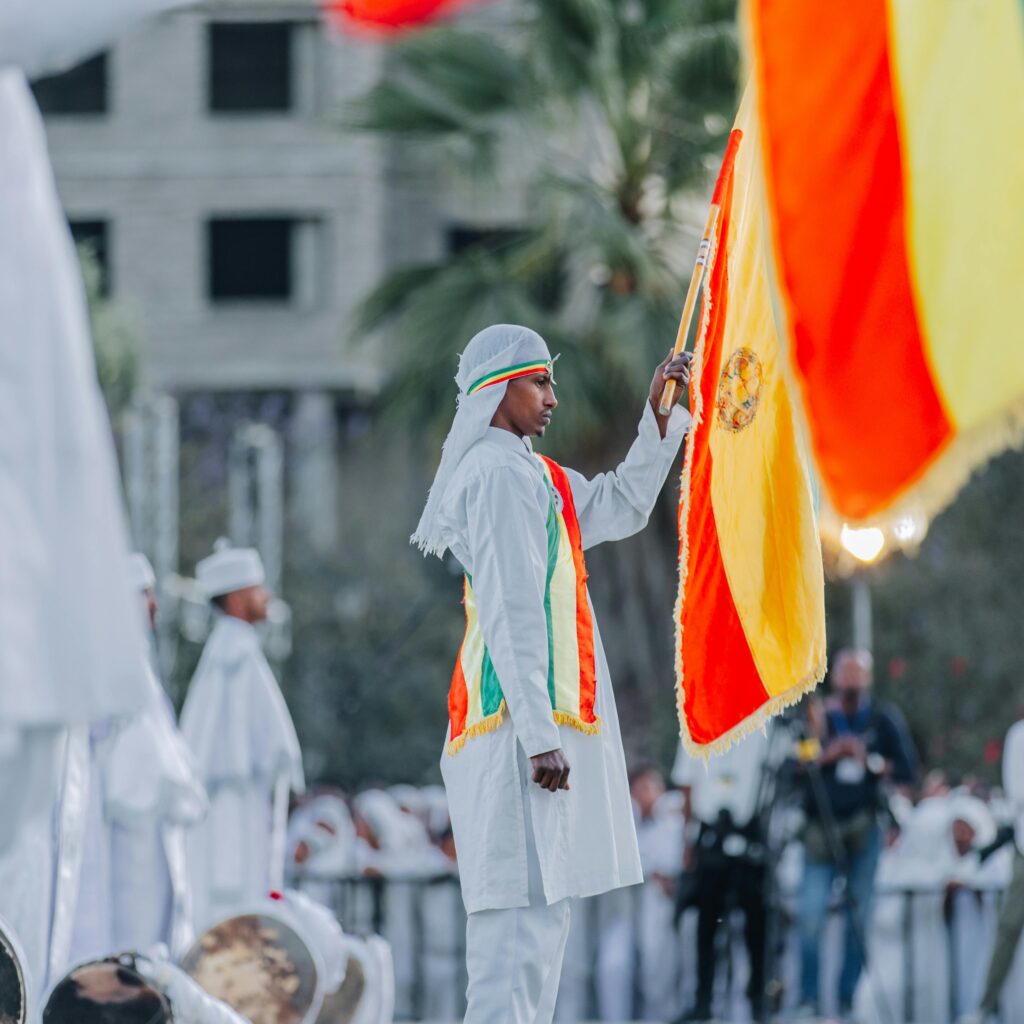
Andrew DeCort, a lecturer on religious and political ethics and Ethiopian studies, writes that Christian nationalism is “tearing Ethiopia apart.” In a country where Christians believe the myth that Ethiopia is an island of Christianity in a sea of Islam, believing the nation is “destined by God for greatness under Christian leadership,” religiously inflected ethnonationalism is “supercharging enmity and silencing critical voices calling for the end of war, genuine dialogue, and an inclusive Ethiopia where diverse people can belong together.”
Though some have dismissed DeCort’s argument as sensationalist, placing blame on “ethnocentrism” instead, religion scholar Terje Østebø argues that Orthodox Christianity plays “a dominant role in producing a particular religious nationalism … characterized by a strong form of Ethiopian exceptionalism.”
In Nigeria, Ebenezer Obadare, senior fellow for Africa studies at the Council on Foreign Relations, speaks of “Pentecostal nationalism,” which plays on the concerns of “a cross section of Christians” with grievances against perceived marginalization in a country where the population is almost evenly split between Muslims and Christians. “Advocating for a fusion of Christian and civic life,” this form of Nigerian nationalism is driven by dominion theology, or “dominionism,” according to emeritus professor of African studies Jeffrey Haynes. Rooted in Christian Reconstructionism, dominion theology is a belief that Christians should exercise authority over all areas of life, including politics, culture and society, based on biblical principles.
On a continent where religio-ethnic conflict has caused numerous conflicts and civil wars in recent decades, the observers above suggest Christian nationalism — and particular Orthodox or Pentecostal forms thereof — represent a potentially potent threat to democracy and political stability.
[Example Story] Christian Nationalism Is Tearing Ethiopia Apart
Andrew DeCort, Foreign Policy
June 18, 2022

A religious revival rooted in the country’s imperial history has coincided with civil war and the spread of genocidal rhetoric—endangering a diverse and multifaith nation.
An ancient Christian imperialism is resurging in Ethiopia today under Prime Minister Abiy Ahmed. This archaic vision promises to unify Ethiopia and restore its divine glory. But it appears to be shattering Ethiopia and fueling catastrophic suffering.
Its core belief is that Ethiopia is a Christian nation created and destined by God for greatness under Christian leadership. Today it is supercharging enmity and silencing critical voices calling for the end of war, genuine dialogue, and an inclusive Ethiopia where diverse people can belong together.
Sources and experts
-
Heidi Beirich
Heidi Beirich is an expert on the American and European far right, including white supremacist, anti-immigrant, antigovernment and other extremist movements. In 2020, with Wendy Via, Beirich co-founded the Global Project Against Hate and Extremism to monitor and counter increasingly transnational hate movements.
-
Anthea Butler
Anthea Butler is the Geraldine R. Segal Professor in American Social Thought and chair of religious studies at the University of Pennsylvania. A historian of African American and American religion, she specializes in the history of Pentecostalism and is the author of White Evangelical Racism: The Politics of Morality in America.
-
João Chaves
João Chaves is assistant professor of the history of religion in the Americas at Baylor University. He has written on migration, evangelical history in the U.S. and Brazil, and evangelicals’ relationship to politics in the Americas.
-
Christians Against Christian Nationalism
Christians Against Christian Nationalism is a large group of faith leaders concerned that Christian nationalism presents a persistent threat to both religious communities and democracy. Amanda Tyler of the Baptist Joint Committee for Religious Liberty is lead organizer. The press contact is Karlee Marshall.
-
Pamela Cooper-White
Pamela Cooper-White is the Christiane Brooks Johnson Professor Emerita of Psychology and Religion at Union Theological Seminary at New York City. She is the author of The Cry of Tamar: Violence Against Women and the Church’s Response and Gender, Violence and Justice: Collected Essays on Violence Against Women.
-
Clayton Crockett
Clayton Crockett is a professor in the department of philosophy and religion at the University of Central Arkansas and director of the interdisciplinary religious studies program there. He regularly teaches courses on exploring religion; philosophy of religion; religion, science and technology; and religion and psychology. He has authored or edited a number of books, including Religion, Politics and the Earth.
-
Miranda Cruz
Miranda Cruz is a professor of theology at Indiana Wesleyan University, with a focus on the practical application of Christian doctrine in life and ministry. She is also the author of Faithful Politics: Ten Approaches to Christian Citizenship and Why It Matters.
-
Neil Datta
Neil Datta leads the European Parliamentary Forum for Sexual and Reproductive Rights. Based in Brussels, the EPF is a network of Members of Parliament throughout Europe advocating for sexual and reproductive rights in Europe and abroad.
-
Miguel A. De La Torre
Miguel A. De La Torre teaches social ethics at Iliff School of Theology in Denver, where he directs the school’s Justice and Peace Institute. Issues he can discuss include religion’s effects on class/race/gender oppression, Santeria, Cuba and liberation theology. His numerous books include, as co-editor, Rethinking Latino(a) Religion and Identity and Handbook of Latina/o Theologies.
-
Andrew DeCort
Andrew DeCort is a theologian, writer and ethicist. He is the author of Reviving the Golden Rule and Blessed Are the Others and founder of the Institute for Faith and Flourishing.
-
Angela Denker
Angela Denker, a veteran journalist and Lutheran pastor, is author of Red State Christians: A Journey Into White Christian Nationalism and the Wreckage It Leaves Behind.
-
David M. Elcott
David Elcott is the retired Henry and Marilyn Taub Professor of Practice in Public Service and Leadership at New York University’s Wagner School of Public Service. His work has focused on civic obligation, community building, and interfaith and ethnic activism. He is the author of Faith, Nationalism and the Future of Liberal Democracy.
-
John Fea
John Fea is an American history professor at Messiah College in Grantham, Pennsylvania. Fea writes often about the role of religious leaders in the Trump administration and is the author of Believe Me: The Evangelical Road to Donald Trump.
-
Philip Gorski
Philip Gorski is professor of sociology at Yale University. He is a comparative-historical sociologist with work on topics such as state formation, nationalism, revolution, economic development and secularization and with particular attention given to the interaction of religion and politics. He co-runs the Religion and Politics Colloquium at the Yale MacMillan Center and is co-author (with Samuel L. Perry) of The Flag and the Cross: White Christian Nationalism and the Threat to American Democracy.
-
Robert P. Jones
Robert P. Jones is president and founder of Public Religion Research Institute, or PRRI. He has written several books, including White Too Long: The Legacy of White Supremacy in American Christianity, which won a 2021 American Book Award.
-
Gionathan Lo Mascolo
Gionathan Lo Mascolo is a Berlin-based political adviser with a focus on democracy, extremism and religion. He is editor of the volume The Christian Right in Europe.
-
Carly Machado
Carly Machado is a professor of anthropology at the Federal Rural University of Rio de Janeiro. With Patrícia Birman, she coordinates the Distúrbio-UERJ Research Group (Devices, Urban Plots, Orders and Resistances).
-
Cynthia Miller-Idriss
Cynthia Miller-Idriss is the founding director of the Polarization and Extremism Research and Innovation Lab at American University. Miller-Idriss regularly testifies before the U.S. Congress or briefs policy, security, education and intelligence agencies in the U.S., the United Nations and other countries on trends in domestic violent extremism and strategies for prevention and disengagement. To request an interview for a news story, call AU Communications at 202-885-5950 or submit a request.
-
Bradley Onishi
Brad Onishi is a social commentator, scholar and co-host of the “Straight White American Jesus” podcast, which ranks in the top 50 of politics shows on Apple’s podcast charts. He is the author of Preparing for War: The Extremist History of White Christian Nationalism – And What Comes Next.
-
Terje Østebø
Terje Østebø is a professor at the University of Florida. His research interests are on Islam in contemporary Ethiopia, Islam, politics, and Islamic reformism in Ethiopia and the Horn of Africa, Salafism in Africa and Christian-Muslim relations.
-
Ronilso Pacheco
Ronilso Pacheco is a theologian interested in democracy, race, fundamentalism, and extremism. He is the author of the books Teologia Negra (Black Theology) and Occupy, Resist, and Subvert. He is a frequent contributor to various media outlets in Brazil.
-
Samuel L. Perry
Samuel L. Perry is professor of sociology at the University of Oklahoma. He is an expert on conservative Christianity and American politics, race, sexuality and families. He is the author or co-author of numerous books, including Growing God’s Family, Addicted to Lust, Taking America Back for God and The Flag and The Cross.
-
Katherine Stewart
Katherine Stewart is the author of The Good News Club: The Christian Right’s Stealth Assault on America’s Children, a look at religious fundamentalism’s influence on public education (2012), as well as The Power Worshippers: Inside the Dangerous Rise of Religious Nationalism (2020) and Money, Lies, and God: Inside the Movement to Destroy American Democracy (2025).
-
Drew Strait
Drew Strait is associate professor of New Testament and public faith at Anabaptist Mennonite Biblical Seminary and an expert on how early Jewish and Christian communities negotiated political idolatry.
-
Matthew D. Taylor
Matthew D. Taylor is a senior scholar at the Institute for Islamic, Christian and Jewish Studies, where he specializes in Muslim-Christian dialogue, evangelical and Pentecostal movements, religious politics in the U.S. and American Islam. Media inquiries should be directed to ICJS’ communications and marketing director, John Rivera.
-
Jemar Tisby
Jemar Tisby is a historian who studies, writes and speaks on racism in the church. He is the author of The Color of Compromise: The Truth About the American Church’s Complicity in Racism, How to Fight Racism and The Spirit of Justice.
-
Camila Vergara
Camila Vergara is a critical legal theorist, historian and journalist from Chile writing on the relation between inequality, corruption and domination, and how to institutionally empower common people to resist oppression from the powerful few. She is a senior lecturer at the University of Essex. Contact through her website.
-
Jon Ward
Jon Ward is senior political correspondent at Yahoo News, where he writes about politics, culture and religion. Ward is the author of Camelot’s End: Kennedy vs. Carter and the Fight That Broke the Democratic Party and Testimony: Inside the Evangelical Movement That Failed a Generation. Contact via publicist Kelly Hughes.
-
Andrew Whitehead
Andrew Whitehead is professor of sociology and director of the Association of Religion Data Archives at Indiana University-Purdue University Indianapolis. He researches the relationship between religion and other social forces, such as the family.
-
Word & Way
Word & Way is a state Baptist newspaper published in Jefferson City, Missouri. The editor is Brian Kaylor, author of The Bible According to Christian Nationalists.
Related ReligionLink content
- 27 sources on education and ‘church-state separation’ under Trump
- How might America’s religious communities sway election?
- Religion & immigration ahead of the 2024 elections
- Culture wars renewed: 25 sources ahead of the 2024 elections
- U.S. presidential primaries: The religion source guide
- Hindu nationalism: A roundup of reporting and resources
- Hail Mary, Mother of Midterms: Religion and the 2022 elections
- War in Ukraine: Covering the conflict’s religious contours
- 20 experts to help explain antifa, Proud Boys and others grabbing headlines during this election season
- QAnon and beyond: 20 experts who can explain why people believe conspiracy theories
- 20 experts to help you cover the impact religious voters may have on the presidential election
- Religion and Betsy DeVos
- Tea Party politics and Christianity: Strange bedfellows?
- ‘Hail to the (New) Chief’: Barack Obama and the future of religion and politics
- A guide to evangelicals and politics
This Reporting Guide was produced by Ken Chitwood (Editor, ReligionLink) with editorial assistance from Mary Gladstone and Judith Golub.